

Global Implementation of UHF RFID System for End-to-End Textile Tracing in Lindström Groups Rental and Industrial Laundry Operations
Case study update date:
Global Implementation of UHF RFID System for End-to-End Textile Tracing in Lindström Groups Rental and Industrial Laundry Operations
This case study demonstrates the digital transformation of rental textile management (workwear, uniforms, linen) at the international Lindström Group. The solution spans 24 countries, providing full control over millions of circulating items and creating new value for clients in healthcare, hospitality, and industry.
Pre-Implementation Problems
Before RFID implementation, Lindström Groups global textile rental and servicing operations faced several systemic issues:
- High Textile Losses: Annual losses accounted for 10–30% of turnover due to lack of precise tracking.
- Lack of End-to-End Visibility: Impossible to trace an items lifecycle from production to customer and back.
- Inefficient Inventory: Over-purchasing due to outdated stock data, tying up working capital in excess.
- Process Errors: Manual sorting and accounting led to errors in shipping, washing, and inventory.
- High Operational Costs: Significant labor costs for routine batch sorting and inventory counts.
- Low Customer Transparency: Clients in healthcare and hospitality lacked transparency regarding hygiene and delivery timelines.
Solution and RFID System Architecture
To solve these problems, passive UHF RFID technology was selected and scaled globally in partnership with HID Global.
Hardware
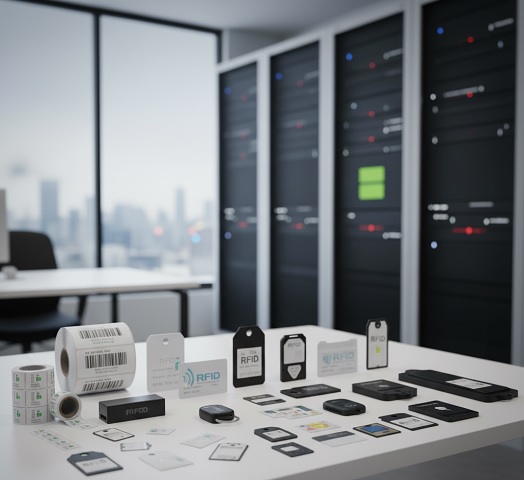
- Tags: Specialized passive UHF RFID tags compliant with EPC Gen2 standard, HID LinTRAK series with Impinj Monza/NXP chips. Tags are designed for extreme industrial laundry conditions (durable laundry tags), withstanding over 200 cycles of washing, tunnel drying, and chemical cleaning. Source-tagging is applied at production or intake (heat-seal or sewn-in).
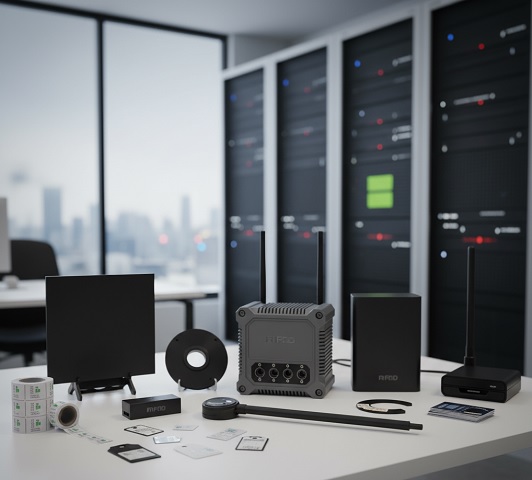
- Readers: Fixed HID SlimFlex/Speedway readers installed on washing lines, sorting lines, and warehouse portals. Mobile handheld readers for inventory at warehouses and during customer deliveries.
Software and Integration
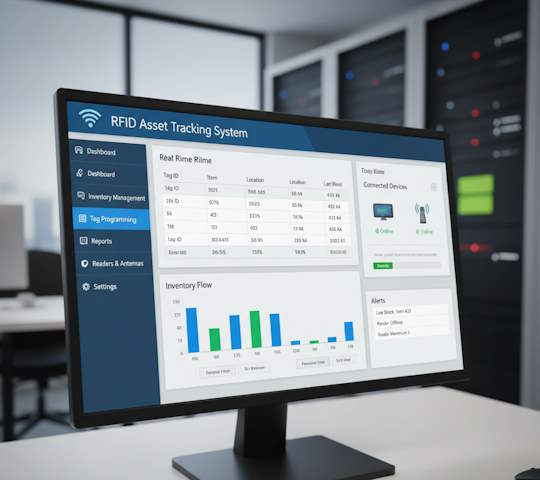
- Management Platform: Cloud-based HID Acuity (HID Textile Services) platform for centralized data management, lifecycle monitoring, and analytics. Full integration with Lindströms corporate ERP system.
- Functionality: Bulk reading of up to 500–1000 tags per second at distances up to 5–8 meters. Automatic registration at all stages: washing, sorting, shipping. Customer portals with online visibility of order status.
Post-Implementation Process: As-is vs. To-be
| Process Aspect | As-is (Before Implementation) | To-be (After RFID Implementation) |
|---|---|---|
| Post-Wash Sorting | Manual batch sorting, visual identification, high error probability, and flow slowdown. | Automatic bulk registration on the conveyor. The system automatically identifies and routes each item according to the order. Sorting speed increases multiple times. |
| Accounting & Inventory | Periodic manual inventories, paper logs, data discrepancies. | Instant inventory of entire warehouse with handheld reader. Accounting accuracy 98–99.9%. Real visibility of wash cycle count, location, and status of each item. |
| Customer Interaction | Limited transparency, paper reports, manual status inquiries. | Online customer portals with detailed information about their order: whats in wash, in transit, ready for shipment. Full traceability for compliance in healthcare and hospitality. |
| Lifecycle Management | Textile replacement based on schedule or visual wear, inefficient resource use. | Optimization of wash cycles based on actual wear (data from tags). Automatic alerts for loss or end-of-life items. |
| Logistics & Shipping | Manual order picking, risk of shipping errors. | Automatic verification of order completeness when passing through RFID portals. 100% shipping accuracy guaranteed. |
Implementation Results (12–36 months)
Global deployment of the RFID system brought Lindström Group significant operational and customer advantages:
- Inventory Accuracy: Achieved a level of 98–99.9% across all countries of operation.
- Process Speed: Sorting and accounting time reduced by 5–20 times.
- Loss Reduction: Textile losses decreased by 20–50% depending on region.
- Efficiency Increase: Overall efficiency of washing and logistics processes improved by 30–50%.
- Customer Experience Improvement: Delivery transparency and compliance with hygiene standards became key competitive advantages.
- Tag Durability: Tags proved resistant to over 200 cycles of industrial processing without data degradation.
Economic Effect / ROI
Investments in RFID infrastructure paid off through comprehensive cost reduction and new value creation:
- Reduction in Losses and Repurchases: Direct savings on new textile purchases amounted to 20–50%.
- Labor Optimization: Labor costs for sorting and inventory decreased by 30–60%.
- Increased Loyalty and Contracts: Service improvement strengthened relationships with existing clients and attracted new ones, especially in demanding healthcare and hospitality segments.
- Payback Period: Ranged from 18–48 months depending on the implementation scale in each country.
- Return on Investment (ROI): Over a 3–5 year period, ROI is estimated in the range of 200–400%, with variations across regions and client segments.
Sources Card and Realistic Estimates
| Category | Source / Confirmation | Data Type / Note |
|---|---|---|
| Real Implementations | HID Global case studies (2018–2024), RFID Journal, Lindström reports | Global rollout, LinTRAK tags, client transparency |
| Technical Specifications | HID LinTRAK datasheets, Impinj Monza laundry tags | EPC Gen2 durable tags (200+ cycles), fixed/handheld readers |
| Integration | HID Acuity cloud platform, Lindström ERP | Client portals, lifecycle monitoring, bulk processing |
| Process Metrics | HID benchmarks, textile rental industry studies | Sorting/inventory time ×5–20, accuracy 98–99.9% |
| Economic Metrics | HID/Lindström case estimates, European laundry benchmarks | Loss reduction 20–50%, labor 30–60%, ROI 200–400% estimates |
| Calculation Methodology | Synthesis of cases (Lindström + similar Berendsen/CWS), averaging benchmarks | Ranges based on multi-country scale and rental model |
Legal-SEO Note: This information is for reference purposes only and is based on public sources. References to trademarks (HID, Impinj, LinTRAK, etc.) do not imply affiliation. Professional consultation is recommended for adaptation to specific business needs.
Frequently Asked Questions (FAQ)
What problems did Lindström Group face before RFID implementation?
Manual sorting and accounting led to high textile losses (10–30% annually), lack of visibility into product lifecycle, over-purchasing due to outdated stock data, errors in shipping/washing, high labor costs for inventory, and low transparency for clients in healthcare/hospitality sectors.
What RFID solution was implemented?
Passive UHF RFID tags compliant with EPC Gen2 standard (HID LinTRAK series with Impinj Monza/NXP chips), withstanding 200+ industrial wash cycles. Source-tagging at production. Fixed readers on washing/sorting lines, handheld readers for inventory. HID Acuity platform for data management and integration with Lindström ERP.
What economic results were achieved?
Reduction in losses and repurchases by 20–50%; optimization of labor costs for sorting/inventory by 30–60%; payback period of 18–48 months; ROI in the range of 200–400% over 3–5 years depending on region and client segment.