



Case Study: Global RFID Implementation in the Fast Fashion Network Zara (Inditex Group)
Case study update date:
Case Study: Global RFID Implementation in the Fast Fashion Network Zara (Inditex Group)
The world's fashion industry leader achieved unprecedented operational efficiency by implementing RFID tags on 100% of items. The solution, based on reusable security tags, radically improved inventory accuracy, accelerated all logistics processes, and significantly increased sales through constant availability of current collections.
Company and Production Context
Zara, part of the Inditex Group, is a global fast fashion leader with a fully vertically integrated business model (from design and production to distribution and retail). The company manages thousands of stores in over 200 countries, releasing up to 20 or more collections per year and processing billions of clothing and accessory items annually. The global RFID rollout was completed between 2014 and 2016, covering 100% of items.
Problems Before RFID Implementation
Rapid collection changes and high turnover created critical challenges for inventory management based on old technologies:
- Critically Inaccurate Accounting: Discrepancies between system and physical stock reached 15–25% due to high turnover speed.
- Inventory Imbalance: Constant out-of-stocks (missing items on the shelf) and overstocks (dead stock), leading to lost sales and markdowns.
- Slow and Infrequent Audits: A full store inventory took days or even weeks and was conducted no more than 1-2 times a month.
- Low Operational Efficiency: Long checkout queues due to item-by-item scanning, manual search for items to replenish shelves.
- High Losses: Significant losses from theft and accounting errors (shrinkage).
- Omnichannel Limitations: Poor visibility of stock in a specific store hindered the implementation of services like Buy Online, Pickup In-Store (BOPIS).
Solution and System Architecture
Zara implemented an innovative, cost-effective, and comprehensive RFID solution integrated into the entire value chain.
Key Features and Technical Components
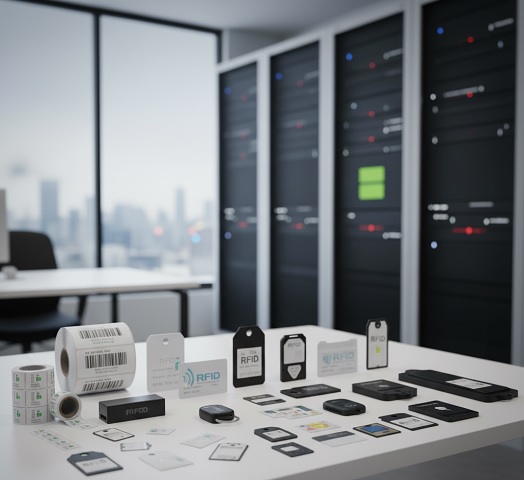
- Smart Reusable Tags: Passive UHF RFID tags compliant with EPC Gen2 standard (GS1 compatible) are embedded in reusable security tags (alarm tags). Impinj Monza chips. After sale, the tag is removed and returned to the cycle, minimizing the total cost of ownership.
- Tagging Strategy: 100% coverage of items. Tags are applied either at the production stage or at distribution centers (DC).
- Reading Equipment:
- Fixed: Impinj, Zebra readers on warehouse doors, conveyors, and overhead systems in stores.
- Mobile: Handheld readers for quick inventory of the sales floor and backrooms.
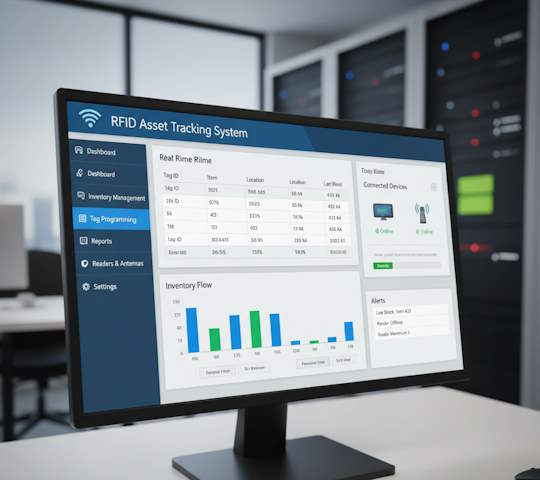
- At Checkout: Built-in readers in standard and self-checkout counters.
- Integration: Deep integration with Inditex's proprietary systems (ERP, POS, WMS). Enables omnichannel business models.
- Performance: Bulk reading of up to 1000+ tags per second at distances up to 8-10 meters.
Process After Implementation (As-is / To-be)
| As-is (Before) | To-be (After) |
|---|---|
| Manual scanning of each item's barcode during receiving and shipping. | Automatic bulk registration of entire boxes and pallets passing through door RFID portals. |
| Inventory once every 1-2 months, taking several days. | Daily or weekly inventory using handheld readers in a few hours. Overhead readers can perform audits during non-operating hours. |
| A salesperson manually searches for the right size or color in the backroom. | Real-time precise localization of any item via reader search. The system directs the employee to a specific rack or box. |
| Long queues: the cashier scans each item individually. | A customer at self-checkout places the entire basket in the reading zone, and the system instantly identifies all items without removing them. |
| Inability to accurately reserve online orders in a specific store. | Precise visibility of stock per item per store enables BOPIS (Buy Online, Pickup In-Store) and ship-from-store services. |
Results (12–36 Months)
- Inventory Accuracy: Increased to 98–99.9%.
- Process Speed: Store inventory time reduced by 10–20 times (from days to hours).
- Product Availability: Reduction in out-of-stocks by 20–30%.
- Replenishment Efficiency: Productivity of shelf replenishment operations increased by 30–50%.
- Customer Service: Checkout waiting time reduced by 40–60%.
- Loss Reduction: Decrease in losses from theft and accounting errors by 20–40%.
- Revenue Growth: Sales increase of 5–15% due to better availability of in-demand items.
Economic Effect / ROI
- Labor Optimization: Reduction in costs for inventory and checkout operations by 30–60%.
- Direct Profit Growth: Sales increase of 5–15% by minimizing out-of-stock losses.
- Loss Reduction: Decrease in losses from theft and markdowns of dead stock by 20–40%.
- Fast Payback: Due to scale and reusable tags, the investment payback period was 12–24 months.
- High Return on Investment (ROI): The overall estimated ROI over 3 years reaches 300–600%.
Sources Card and Realistic Estimates
| Category | Source / Confirmation | Data Type / Note |
|---|---|---|
| Real Implementations | RFID Journal (2014–2020), Inditex Sustainability Reports, Impinj customer stories | Fact of full global deployment by 2016, use of reusable security tags. |
| Technical Specifications | Impinj Monza Datasheets, GS1 standards, Avery Dennison/Checkpoint reports | EPC Gen2 tags embedded in alarm tags, use of overhead and handheld readers. |
| Integration | Inditex proprietary systems, RFID Journal case studies | Integration with ERP/POS/WMS, support for self-checkout and omnichannel order fulfillment. |
| Process Metrics | Industry benchmarks (fast fashion RFID), RFID Journal/Auburn University studies | Data on accuracy, inventory acceleration, reduction in out-of-stocks. |
| Economic Metrics | RFID Journal (sales uplift estimates), fast fashion benchmarks (Zara analogs) | ROI calculations, payback period, sales growth for the fast fashion industry. |
Frequently Asked Questions (FAQ)
What inventory management problems did Zara face before RFID?
The company suffered from low inventory accuracy (15-25% discrepancies), frequent out-of-stocks and overstocks, lengthy inventory counts, high losses from theft, and long checkout queues due to slow item-by-item scanning.
What is unique about the architecture of Zara's RFID solution?
The solution uses passive UHF EPC Gen2 tags embedded in reusable security tags (alarm tags). This combines inventory and anti-theft (EAS) functions. Tags are applied to 100% of items at production and are reused after sale.
What business results did the RFID implementation deliver?
Inventory accuracy reached 98-99.9%, audit times reduced by 10-20x, out-of-stocks decreased by 20-30%, and sales grew by 5-15%. The payback period was 12-24 months with an ROI of 300-600% over 3 years.
Legal & SEO Note
This information is for reference purposes only and is based on public sources. References to trademarks (Impinj, GS1, etc.) do not imply affiliation. Professional consultation is recommended for adaptation to specific business needs.