


Case Study: Implementation of Passive UHF RFID for Tracking 20,000+ Assets at AZ Sint-Maarten Hospital (Mechelen, Belgium)
Case study update date:
Case Study: Implementation of Passive UHF RFID for Tracking 20,000+ Assets at AZ Sint-Maarten Hospital (Mechelen, Belgium)
An innovative solution integrating RFID readers into standard logistics trolleys enabled 100% asset visibility without altering workflows and significantly improved operational efficiency.
Company and Production Context
AZ Sint-Maarten Hospital is a modern regional hospital in Mechelen, Belgium, with over 500 beds, formed in 2018 after merging three campuses into a new complex. It serves tens of thousands of patients annually and manages a fleet of 15,000–20,000 mobile assets: medical equipment, furniture, infusion pumps, monitors, and consumables. Priorities include optimizing logistics, ensuring real-time asset availability, and minimizing costs during the transition to the new facility. The implementation of a passive UHF RAIN RFID system was carried out in partnership with Aucxis (Impinj Gold Partner) for precise room-level asset tracking without changing existing workflows.
Problems Before Implementation
After moving into the new large campus, the hospital faced typical asset management challenges in a large multi-story building:
- Complete lack of visibility into asset location across the entire complex.
- Lengthy equipment search: a single item could take hours to locate.
- High labor costs for medical and technical staff performing manual inventory and search.
- Inventory imbalance: both overstock and shortages existed simultaneously due to outdated data.
- Unnecessary equipment purchases and rentals driven by "safety stock" practices.
- Risks of delays in patient care and annual asset losses of 10–20%.
Solution and Architecture
A unique system was developed based on integrating RFID into the hospital's daily logistics:
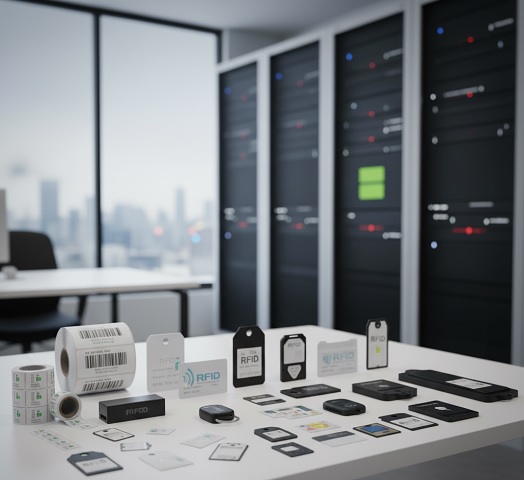
- Tags: Over 15,000–20,000 assets and 6,500 doors were equipped with durable passive UHF RFID tags (EPC Gen2 standard, Impinj Monza chips), resistant to metal, textiles, and medical environments.
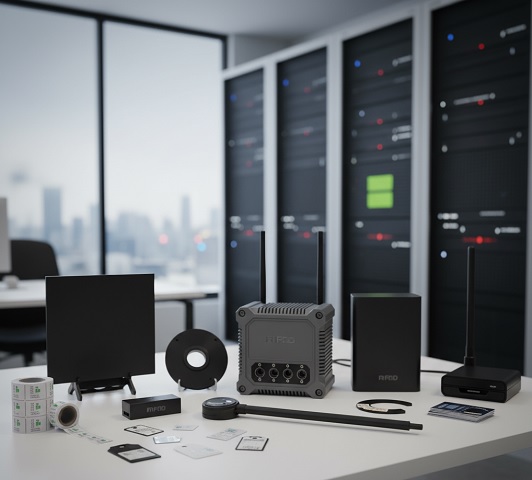
- Equipment: Mobile RFID readers based on Impinj technology were integrated into standard logistics trolleys (lending/drinks trolleys) that visit 90% of rooms daily. Portable transport steps are used for the remaining 10% of rooms.
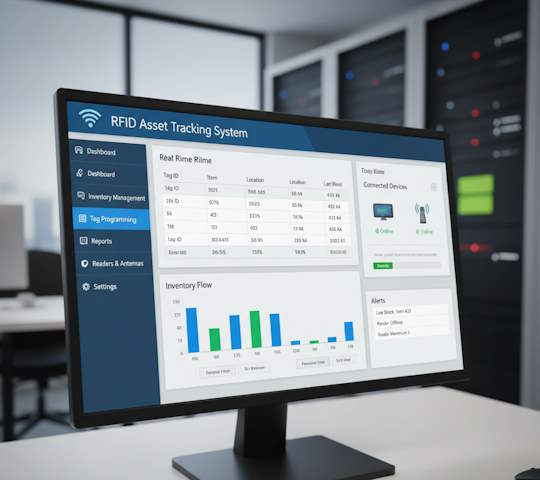
- Software and Integration: The Aucxis software platform is used: POLARIS Asset Management for asset management and HERTZ middleware for data processing. The system is integrated with the Ultimo ERP for maintenance and procurement management.
- Process: Trolleys automatically perform bulk reading of tags without line-of-sight (up to 5–8 m) while moving through corridors, determining the exact room-level location of assets.
Process After Implementation (As-is / To-be)
| As-is (Before) | To-be (After) |
|---|---|
| Manual equipment search with room-by-room inspection | Automatic asset registration during standard logistics trolley routes |
| Periodic, labor-intensive inventories | Continuous, passive real-time inventory without additional staff tasks |
| No data on equipment location and status | Precise room-level localization and automatic data export to ERP for maintenance/replacement alerts |
| Reactive stock and procurement management | Predictive maintenance planning and optimized procurement based on real-time data |
Results (12–36 months)
- Inventory Accuracy: Achieved 98–99.9%.
- Coverage: 100% of assets with room-level precision.
- Equipment Search Time: Reduced by 50–80%.
- Equipment Utilization: Improved by 20–40% through optimal distribution.
- Reduction in Losses and Unnecessary Purchases: By 10–30%.
- Maintenance Planning: Enhanced planning for maintenance and end-of-life replacement.
- Visibility: Full asset visibility achieved without changing staff workflows.
Economic Effect / ROI
- Labor Cost Reduction: For search and inventory tasks — by 30–60%.
- Minimization of Losses and Overstock: Savings of 20–40% through reduced asset losses and optimized stock.
- Procurement Optimization: Avoidance of unnecessary purchases and rentals.
- Payback Period (PP): 18–48 months due to the cost-efficient passive RFID solution and integration into existing processes.
- ROI (over 3–5 years): Expected in the range of 200–400%, depending on the scale of implementation and degree of procurement optimization.
Source Card and Realistic Estimates
| Category | Source / Confirmation | Data Type / Note |
|---|---|---|
| Real Implementations | Impinj customer story (2023–2024), Aucxis case study, RFID Journal (2022) | >15,000–20,000 assets, mobile trolley readers, room-level tracking |
| Technical Specifications | Impinj/Aucxis datasheets, POLARIS/HERTZ platform | EPC Gen2 passive tags, mobile Impinj readers on trolleys, door tagging (6,500) |
| Integration | Aucxis HERTZ middleware, Ultimo ERP integration | Data export to ERP, no workflow changes, offline buffering |
| Process Metrics | Aucxis/Impinj benchmarks, healthcare RFID studies | Coverage 90–100% daily, search time –50–80%, accuracy 98–99.9% |
| Economic Metrics | Industry benchmarks (NHS/EU hospitals), Aucxis reports | Loss/procurement reduction 10–40%, labor 30–60%, ROI 200–400% estimates |
Legal-SEO Note
This information is for reference purposes only and is based on public sources. References to trademarks (Impinj, Aucxis, etc.) do not imply affiliation. Professional consultation is recommended for adaptation to specific business needs.
FAQ
How was RFID implemented without changing hospital workflows?
RFID readers were integrated into existing logistics trolleys (for dispensing medication, drinks) that visit 90% of rooms daily. The remaining 10% of rooms are scanned using transport steps. Staff perform no additional actions.
How many assets and rooms were covered by the system?
The system covered over 15,000–20,000 mobile assets and 6,500 doors for precise room-level identification. Daily coverage is 90–100% of all assets.
What economic effect was achieved?
Reduction in labor costs for search and inventory by 30–60%, reduction in losses and overstock by 20–40%, decrease in unnecessary purchases. Payback period 18–48 months, ROI 200–400% over 3–5 years.