



RFID Implementation for Baggage and Emergency Equipment Tracking: Delta Air Lines Case Study
Case study update date:
RFID Implementation for Baggage and Emergency Equipment Tracking: Delta Air Lines Case Study
This case demonstrates how one of the world's largest airlines implemented a large-scale RFID tracking project for baggage and onboard emergency equipment, achieving ≈99.9% accuracy and full compliance with IATA Resolution 753.
Company and Production Context
Delta Air Lines — one of the world's largest airlines with a fleet of over 900 aircraft, operating more than 5,000 daily flights and serving over 300 million passengers annually (at pre-COVID recovery levels by 2024–2025). The company processes billions of baggage units and onboard emergency equipment (life vests under each seat, oxygen generators, fire extinguishers, medical kits). Large-scale UHF RFID implementation for baggage tracking (one of the first and largest rollouts per IATA Resolution 753, from 2017 to 2022, covering over 120 airports) and emergency equipment (life vests since 2018, tens of millions of tags across the fleet).
Pre-Implementation Problems
Manual processes and outdated technologies created significant operational and financial issues:
- Mishandled baggage (loss/delay): over 20 million cases/year industry-wide, cost exceeding $2 billion.
- Manual emergency equipment inspections: took hours per aircraft, paper log maintenance.
- Traceability errors (10–20% discrepancies): inaccuracies in baggage tracking.
- High labor costs: baggage sorting and pre-flight checks required extensive personnel.
- Flight delays: due to baggage searches and lengthy inspections.
- Regulatory risks: need for IATA Resolution 753 compliance by 2018.
- Passenger dissatisfaction: due to baggage loss and delays.
Solution and Architecture
A comprehensive RFID identification system based on industry standards was implemented:
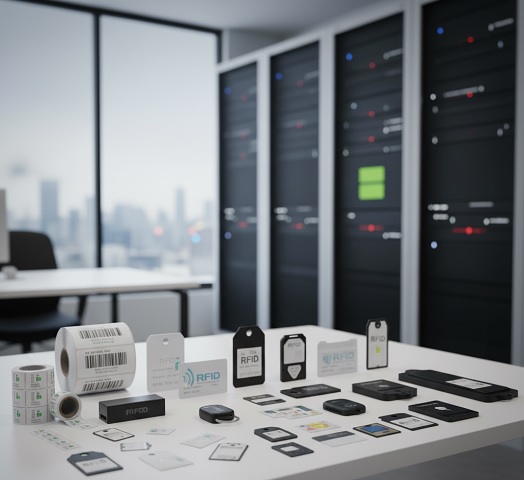
- Baggage tags: Passive UHF RFID tags compliant with EPC Gen2 standard (ATA-compatible, Impinj Monza chips). Durable paper/plastic tags with read accuracy up to ≈99.9%, applied during check-in instead of optical barcodes.
- Emergency equipment tags: Embedded/attached RFID tags for life vests (Avery Dennison/Impinj).
- Hardware:
- Fixed readers (Impinj Speedway/Zebra) at bag drops, sorting lines, loading points, and aircraft holds (over 6,000 readers network-wide).
- Handheld readers for last-mile verification and inspections.
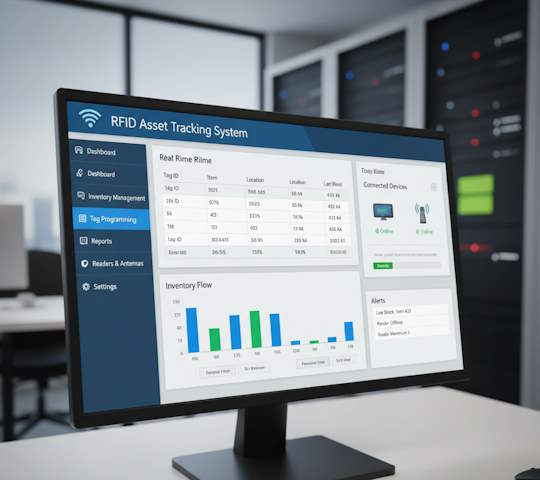
- Software: Integration with Delta's BagScan system and MRO/ERP systems for real-time tracking.
- Process: Bulk reading of up to hundreds or thousands of tags per second depending on configuration from distances up to 10 meters; real-time tracking from check-in to delivery.
Post-Implementation Process (As-is / To-be)
| Process Aspect | As-is (Before RFID) | To-be (After RFID Implementation) |
|---|---|---|
| Baggage Tracking | Optical barcode scanning (requires line-of-sight, single reads). | Automatic registration at all stages (drop → sort → load → unload → claim), real-time alerts for misroutes. |
| Equipment Inspections | Manual visual inspection of life vests, paper logs, hours per aircraft. | Bulk scanning with handheld reader in seconds per seat row, automated pre-flight compliance reports. |
| Mishandled Baggage Reconciliation | Manual data reconciliation, lengthy searches. | Proactive passenger notifications, automatic location tracking. |
| Compliance | Periodic audits, risk of non-compliance with IATA 753. | Full automatic compliance with IATA Resolution 753 standard. |
Results (12–36 Months)
- Baggage tracking accuracy: Achieved ≈99.9% tracking accuracy.
- Tag read rates: Up to ≈99.9% successful reads.
- Reduction in mishandled baggage: by 20–30% (Delta rates below industry average).
- Inspection time reduction: life vest inspections accelerated 10–50 times (from hours to minutes per aircraft).
- Improved on-time performance: increased punctuality metrics.
- Improved passenger satisfaction: Net Promoter Score (NPS) uplift.
- Full compliance: All IATA Resolution 753 requirements met.
Economic Effect / ROI
- Reduction in mishandled baggage costs: by 20–40% (saving millions annually).
- Optimization of inspection/maintenance labor: by 40–70%.
- Minimization of compensations/losses: through precise tracking.
- Investment payback period: 24–48 months for a project of billions of baggage journeys scale.
- Overall ROI: Expected return on investment over 3–5 years is estimated in the range of 300–500%, including reputational and operational benefits (according to IATA estimates and data from major carriers).
Source Card and Realistic Estimates
| Category | Source / Confirmation | Data Type / Note |
|---|---|---|
| Real Implementations | RFID Journal (2017–2024), Delta press/IATA reports, Impinj case studies | Baggage rollout 2017–2022 (>120 airports), life vests – large-scale deployment with tens of millions of tags. |
| Technical Specifications | Impinj Monza Datasheets, IATA Resolution 753, ATA standards | EPC Gen2 permanent bag tags, read accuracy up to ≈99.9%, bulk airport readers. |
| Integration | Delta BagScan System, MRO reports | Real-time tracking, passenger notifications, pre-flight compliance. |
| Process Metrics | RFID Journal/IATA Benchmarks, Delta performance data | Mishandled bags –20–30%, vest inspections ×10–50 faster. |
| Economic Metrics | IATA Baggage Reports ($2B+ savings), Delta and major carrier estimates | Cost reduction 20–40%, ROI 300–500% estimates. |
Legal & SEO Note
This information is for reference purposes only and is based on public sources. References to trademarks (Impinj, Avery Dennison, Zebra, etc.) do not imply affiliation. Professional consultation is recommended for adaptation to specific business needs.
FAQ
What RFID tags are used for baggage tracking at Delta Airlines?
Passive UHF RFID tags compliant with the EPC Gen2 standard (ATA-compatible), utilizing Impinj Monza chips. These durable paper/plastic tags with read accuracy up to ≈99.9% are applied during baggage check-in.
How did RFID reduce emergency equipment inspection time?
Bulk scanning with a handheld reader allows checking all life vests in a seat row within seconds, whereas manual visual inspection took hours per aircraft.
What economic impact was achieved?
Reduced mishandled baggage costs by 20-40%, optimized inspection labor by 40-70%. Investment payback was 24-48 months with an ROI of 300-500% over 3-5 years (according to IATA estimates and data from major carriers).