


Historical Case Study (2004–2009): Implementing EPC Gen2 RFID for Supply Chain Security of Purdue Pharmas Controlled Substances
Case study update date:
Historical Case Study (2004–2009): Implementing EPC Gen2 RFID for Supply Chain Security of Purdue Pharma's Controlled Substances
One of the world's first industrial-scale item-level pharmaceutical tagging projects. The implementation of passive UHF RFID tags on packaging lines created electronic pedigree (ePedigree), drastically reduced counterfeiting and diversion risks, and set an industry benchmark for supply chain protection.
Company and Production Context
Purdue Pharma (USA) was a manufacturer of prescription painkillers, including the controlled-release oxycodone product OxyContin. The high street value of the drug made it a target for counterfeiting, theft, and diversion. Production in Wilson, North Carolina, operated at speeds of approximately 100 bottles per minute, outputting millions of units annually. The challenge was to secure the supply chain from manufacturer to distributors (such as Wal-Mart, H.D. Smith) through unique identification of each package.
Problems Before RFID Implementation
Prior to RFID implementation, the controlled substance supply chain was vulnerable and opaque:
- Counterfeiting & Diversion: Refilling empty genuine bottles with counterfeit product was a common practice.
- Unreliable Tracking: Paper-based pedigree and manual verification led to authentication errors in 10-20% of cases.
- Zero Visibility: No real-time tracking of product movement.
- Slow Response: Delays in batch recalls and theft investigations.
- Regulatory Risk: Challenges in meeting future DSCSA and PDMA compliance requirements.
Solution and Architecture
The solution evolved from a pilot to full-scale industrial deployment, becoming an industry benchmark.
Evolution and Technical Components
- Implementation Path: Pilot on the legacy Gen1/Class 0 standard (2004-2005), followed by a transition to the new, more efficient EPC Gen2 standard (2007-2009).
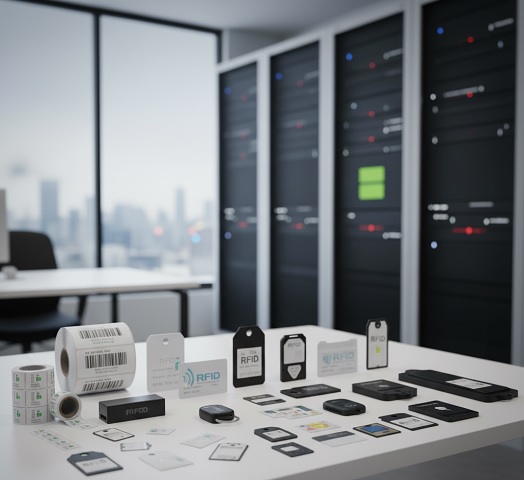
- Tags: Passive UHF RFID tags with Impinj Monza chips. SGTIN-96 encoding (EPCglobal standard). Tags were pre-programmed and applied directly on bottle and case packaging lines.
- Multi-Level Tagging: Item-level (each bottle) and Case-level (case of 48 bottles + a case tag).
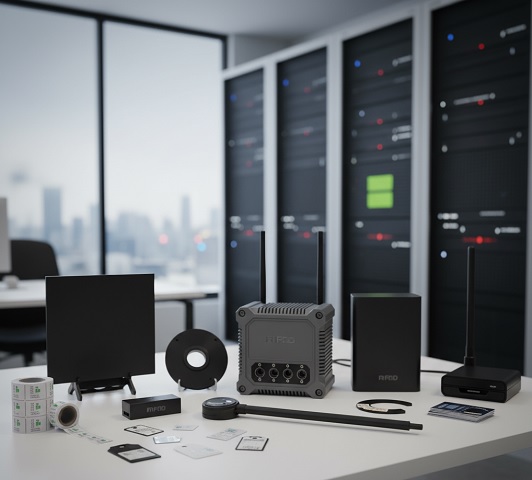
- Hardware: Impinj Speedway readers with specialized antennas (Mini-Guardrail, Mono-static). Near-field antennas were used for reading tags on liquid-filled bottles.
- Integration: Deep integration with the packaging line execution system (Systech). Multi-point verification (post-labeling, pre-case, post-case).
- Performance: Bulk reading of up to 1000+ tags per second at distances up to 3-5 meters.
Process After Implementation (As-is / To-be)
| As-is (Before Implementation, 2004) | To-be (After Implementation, 2009) |
|---|---|
| Manual marking and visual inspection. | Fully automated serialization and tag application on the line. |
| Paper pedigree, transmitted by fax or mail. | Electronic pedigree (ePedigree), automatically generated when aggregating bottles into cases. |
| Spot-checking of barcodes. | 100% automated verification of each bottle and case at multiple line points with RSSI threshold checks for quality control. |
| Days or weeks to trace the origin of a counterfeit. | Traceability to a specific batch and line within minutes (5-15x acceleration). |
| Weak collaboration with law enforcement. | Donation of handheld readers to police for field authentication of drugs. |
Results (12–36 Months)
- Scale: By 2009, over 7.5 million bottles and 155,000 cases had been tagged.
- Accuracy & Quality: Tag readability reached 98–100% after system tuning. 100% verification of product on the line was achieved.
- Supply Chain Security: In pilot areas, the implementation led to a 70–90% deterrence of counterfeiting and diversion attempts.
- Operational Efficiency: Recall execution and traceability speed increased by 5–15 times.
- Compliance Foundation: The project laid the groundwork for future compliance with drug traceability regulations.
Economic Effect / ROI
- Reduction of Direct Losses: Estimated reduction in losses from counterfeiting, theft, and diversion by 30–70%.
- Costs: Additional cost was approximately $0.30–0.50 per tag, not passed on to the consumer.
- Operational Optimization: Improved warehouse operations and avoidance of potential regulatory fines.
- Payback Period: The payback period was estimated at 24–48 months, due to production scale and loss prevention.
- ROI: The estimated return on investment over 3–5 years ranged from 200–500%, primarily from security-related savings.
Sources Card and Realistic Estimates
| Category | Source / Confirmation | Data Type / Note |
|---|---|---|
| Real Implementations | Impinj Press Releases (2007), Packaging Gateway (2009), RFID Journal archives | Pilot 2004–2005 (Gen1), full production 2007–2009 (Gen2). Data on tagged unit quantities. |
| Technical Specifications | Impinj Datasheets (Monza/Speedway), EPCglobal Gen2 standards | Use of near-field for liquids, SGTIN-96 encoding, bulk reading performance. |
| Integration | Purdue Pharma case studies (2007–2009), Systech TIPS system | Packaging line aggregation, ePedigree pilots with wholesalers. |
| Process Metrics | Industry reports (Healthcare Packaging) | Line speed 100 bpm, 100% verification, tag read rates. |
| Economic Metrics | Pharma anti-counterfeiting benchmarks (2005–2010) | Counterfeiting deterrence estimates, tag cost, ROI calculation based on security savings. |
Frequently Asked Questions (FAQ)
What drove Purdue Pharma to implement RFID technology between 2004-2009?
The primary driver was the high risk of counterfeiting and diversion of the controlled painkiller OxyContin. The paper-based pedigree system and manual verification were unreliable, leading to up to 20% authentication errors and failing to secure the supply chain.
What was the technical architecture of the solution?
After a Gen1 pilot, the system migrated to the EPC Gen2 standard. Passive UHF tags (Impinj Monza) with SGTIN-96 encoding were applied to each bottle (item-level) and each case (case-level). Impinj Speedway readers with near-field antennas enabled bulk reading of 1000+ tags per second and 100% line verification.
What were the key results of the implementation?
By 2009, over 7.5 million bottles and 155,000 cases had been tagged. The system achieved 100% verification, 98-100% read rates, a 70-90% deterrence of counterfeit attempts in pilot areas, and accelerated traceability by 5-15 times.
Legal & SEO Note
This information is for reference purposes only and is based on public sources. References to trademarks (Impinj, Systech, EPCglobal, etc.) do not imply affiliation. Professional consultation is recommended for adaptation to specific business needs.