

Case Study: Implementation of UHF RFID Source-Tagging for Genixus KinetiX Ready-to-Administer (RTA) Syringes
Case study update date:
Case Study: Implementation of UHF RFID Source-Tagging for Genixus KinetiX Ready-to-Administer (RTA) Syringes
A manufacturer of prefilled syringes for critical care integrated RFID tags into the label during production, enabling hospitals to automate controlled substance tracking, completely eliminate manual tagging, and significantly enhance patient safety.
Company and Production Context
Genixus (USA) specializes in outsourced (503B) manufacturing of Ready-to-Administer (RTA) prefilled syringes for acute and critical care, including anesthetics and sedatives (propofol, rocuronium). The KinetiX polymer syringe platform is designed for safety enhancement. The first RFID-enabled product, launched in 2022-2023, was propofol in 10 mL and 20 mL syringes. The company focuses on item-level tracking for DSCSA compliance and optimization of controlled substance inventory in hospitals.
Problems Before RFID Implementation
Before the manufacturer-level tagging program, the entire tracking logistics burden fell on hospitals, creating operational risks and high costs:
- High labor costs: daily manual tagging of hundreds of doses.
- Critical inventory errors: discrepancies reached 5–15%.
- Delays in replenishing surgical trays/kits and risks of expiry date breaches.
- Difficulties with rapid batch recalls and control of controlled substance diversion.
- Lack of end-to-end automation in tracking from the hospital pharmacy to administration in the OR.
Solution and System Architecture
The solution shifts the tagging point to the manufacturing stage (source-tagging). The RFID tag becomes an integral part of the syringe label, and data is available immediately upon receipt at the healthcare facility.
Technical Components
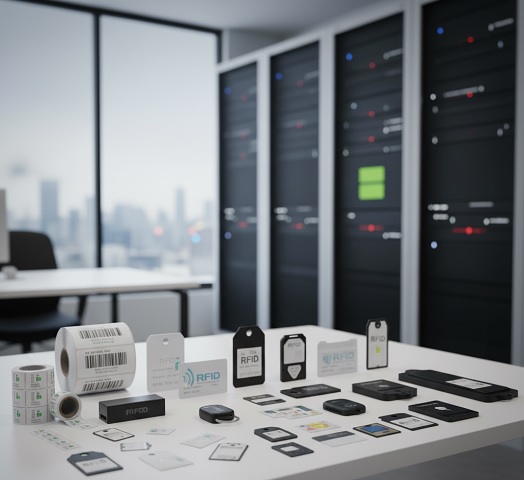
- Tags: Passive UHF tags compliant with EPC Gen2 standard (manufactured by Kit Check). Small form factor, embedded in the label for KinetiX polymer syringes.
- Data Encoding: Each tag is encoded with NDC (National Drug Code), a unique serial number, lot number, and expiry date.
- Reading Equipment: Fixed Kit Check reader stations (for cabinets and trays), handheld readers. Supports bulk reading of 200-400 tags simultaneously at distances up to 3-5 meters.
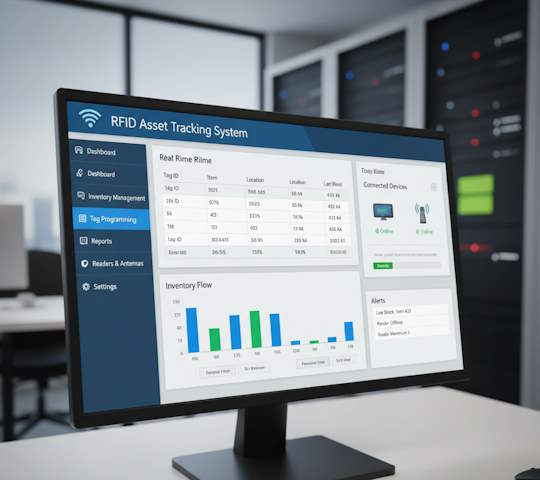
- Integration & Software: Kit Check cloud-based registry for data aggregation. Integration with hospital pharmacy systems for automated accounting, analytics, and alerts.
Process After Implementation (As-is / To-be)
| As-is (Before) | To-be (After) |
|---|---|
| Manual tagging of each syringe in the hospital pharmacy. | Syringes arrive at the facility pre-tagged and encoded. |
| Item-by-item barcode scanning for receiving and inventory. | Automatic bulk registration when placed in a smart cabinet or tray. |
| Manual, labor-intensive search for expired or recalled drugs. | Real-time alerts for expiry dates or recall needs. |
| High time expenditure for surgical kit/tray replenishment. | Automated kit/tray replenishment management based on accurate stock data. |
| Limited visibility into drug usage in operating rooms. | End-to-end tracking from pharmacy to point of administration with analytics for inventory optimization. |
Results (12–36 Months)
- Inventory Accuracy: Achieved 98–99.9% accuracy for controlled substances.
- Tag Reliability: Tag readability is 98–100%.
- Process Efficiency: Time for tagging and inventory reduced by 10–20 times due to complete elimination of manual labor.
- Loss Reduction: Administration errors and losses from expired drugs decreased by 30–60%.
- Recall Speed: Recall execution speed improved by 5–15 times.
- Inventory Management: Efficiency of surgical kit/tray management increased by 30–50%.
Economic Effect / ROI
- Reduction in labor costs for drug tagging and accounting by 40–70%.
- Minimization of financial losses from expiry, recalls, and shortages by 20–50%.
- Optimization of inventory levels, prevention of stockouts.
- Payback Period: 24–48 months for hospitals with high OR drug turnover.
- Estimated Return on Investment (ROI): 200–500% over a 3–5 year period depending on implementation scale and depth of integration with the Kit Check ecosystem.
Sources Card and Realistic Estimates
| Category | Source / Confirmation | Data Type / Note |
|---|---|---|
| Real Implementations | RFID Journal (2022–2024), Kit Check/Genixus Press Releases (2022–2023) | Launch of KinetiX propofol with RFID (2022), expansion to other drugs. Example of real-world manufacturer pre-tagging. |
| Technical Specifications | Kit Check Datasheets, RFID Journal reports | EPC Gen2 UHF tags embedded in labels; compatibility with Kit Check stations and cloud registry. |
| Integration | Kit Check announcements, Genixus platform description | Cloud registry, tray/kit management, integration with hospital cabinets. |
| Process Metrics | Kit Check Benchmarks (100M+ doses tracked), industry pharma RFID data | Elimination of manual tagging, bulk scan speed, 98-100% accuracy. |
| Economic Metrics | Kit Check/Bluesight Reports, healthcare RFID benchmarks | Labor reduction 40-70%, loss minimization 20-50%, ROI estimates 200-500%. |
Frequently Asked Questions (FAQ)
What was the core problem addressed by implementing RFID at Genixus?
Hospitals had to manually apply RFID tags to hundreds of received syringes daily, leading to inventory errors (5-15%), delays, and risks associated with expiry management and control of controlled substances.
What is the architecture of the Genixus and Kit Check RFID solution?
The solution is based on manufacturer-level tagging. Passive UHF RFID tags (EPC Gen2) are embedded into the label of the KinetiX polymer syringe during production. Data (NDC, serial, lot, expiry) is read by fixed (cabinets/tray scanners) or handheld Kit Check readers and synchronized via a cloud registry.
What quantitative results were achieved after 12-36 months?
Inventory accuracy reached 98–99.9%, time for inventory counts was reduced by 10–20x, losses from expired drugs decreased by 30–60%, and recall execution speed improved by 5–15x.
Legal & SEO Note
This information is for reference purposes only and is based on public sources. References to trademarks (Kit Check, Impinj, GS1, etc.) do not imply affiliation. Professional consultation is recommended for adaptation to specific business needs.