


Case Study: Implementation of RAIN RFID Source-Tagging at Fresenius Kabi Pharmaceutical Production
Case study update date:
Case Study: Implementation of RAIN RFID Source-Tagging at Fresenius Kabi Pharmaceutical Production
A global manufacturer of injectable drugs implemented RFID tagging on packaging lines, enabling hospitals to eliminate manual tagging, achieve 99.9% medication inventory accuracy, and significantly enhance patient safety.
Company and Production Context
Fresenius Kabi is a global leader in manufacturing injectable drugs, anesthetics, and critical care products, including prefilled syringes, vials, and bottles. The company supplies millions of unit-dose drugs annually to hospitals in the US and other countries, where high turnover demands flawless inventory control, expiry date management, and regulatory compliance (e.g., DSCSA). The +RFID program was launched in 2020, starting with source-tagging of products like Diprivan (propofol) and Rocuronium at the manufacturing stage.
Problems Before RFID Implementation
Before manufacturer-level tagging, the burden fell entirely on healthcare facilities. Hospitals had to manually tag hundreds of received drug units daily, leading to critical issues:
- High rate of manual identification errors — 5% to 15%.
- Significant delays during inventory counts.
- Complex and slow processes for batch recalls and expiry date management.
- Direct patient safety risks (mix-ups) due to drug identification errors.
- Dependence on line-of-sight barcode scanning and high labor costs for replenishing trays and kits.
Solution and System Architecture
The solution shifts the tagging process to the manufacturing stage (source-tagging). On the packaging line, each drug unit is equipped with a passive UHF RAIN RFID tag (EPC Gen2 standard).
Technical Components
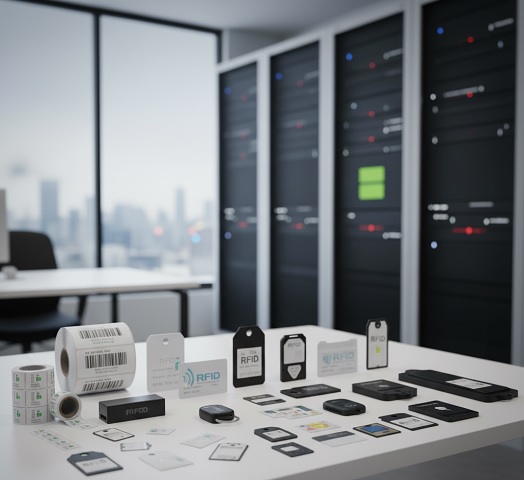
- Tags: Small form-factor inlays (from CCL eAgile/Avery Dennison) compatible with vials and syringes. Impinj Monza/M780 chips.
- Data Encoding: Full compliance with GS1 standards. Each tag is encoded with GTIN/NDC, a unique serial number, lot number, and expiry date.
- Reading Equipment: Fixed readers in storage cabinets and tray stations, plus handheld devices for verification. Supports bulk reading of 200-500 tags simultaneously at distances up to 3-5 meters.
- Integration & Standards: The solution is Auburn University (ARC) certified and ensures full interoperability with major hospital medication management systems like Kit Check, Bluesight, and IntelliGuard via a cloud registry.
Process After Implementation (As-is / To-be)
| As-is (Before) | To-be (After) |
|---|---|
| Manual tagging of drugs by hospital staff. | Drugs arrive at the healthcare facility pre-tagged and encoded. |
| Item-by-item barcode scanning. | Automatic bulk registration when drugs are placed in a smart cabinet or tray. |
| Periodic manual inventory. | 24/7 real-time visibility of stock from receipt to patient administration. |
| Manual, labor-intensive search for drugs during recalls or for expiry management. | Automated alerts for fast recalls and expiry date management. |
Results (12–36 Months)
- Inventory Accuracy: Achieved 98–99.9% accuracy.
- Tag Readability: 98–100% (confirmed by ARC certification).
- Process Efficiency: Time for tagging and inventory reduced by 10–20 times.
- Patient Safety: Medication administration errors reduced by 50–80%.
- Operational Speed: Recall execution speed improved by 5–10 times.
- Logistics: Efficiency of tray replenishment increased by 30–60%.
Economic Effect / ROI
- Reduction in labor costs for drug tagging and accounting by 40–70%.
- Minimization of financial losses from expired or recalled drugs by 20–50%.
- Optimization of inventory levels, avoidance of stockouts.
- Payback Period: 24–48 months for large hospitals with high OR drug turnover.
- Estimated ROI: 200–500% over a 3–5 year period, depending on implementation scale and integration depth.
Sources Card and Realistic Estimates
| Category | Source / Confirmation | Data Type / Note |
|---|---|---|
| Real Implementations | Fresenius Kabi press releases (2020–2023), RFID Journal (2021–2023) | +RFID program launch, work with Diprivan/Rocuronium, compatibility with Kit Check/Bluesight. |
| Technical Specifications | GS1 standards, Auburn ARC certification | EPC Gen2 RAIN tags, GS1 encoding (NDC+serial+lot+expiry), small form-factor inlays. |
| Integration | Kit Check/Bluesight announcements, DoseID consortium | Interoperability with major cabinet/tray system vendors, cloud registry. |
| Process Metrics | ASHP Foundation reports, hospital feedback | Elimination of manual tagging, bulk scan speed, 98-100% accuracy. |
| Economic Metrics | Industry benchmarks (KLAS reports) | Labor reduction 40-70%, loss minimization 20-50%, ROI estimates. |
Frequently Asked Questions (FAQ)
What problems did manufacturer-level RFID tagging solve?
Prior to implementation, hospitals manually tagged items, leading to identification errors (up to 15%), delays, difficulties with recalls, and patient safety risks.
What is the architecture of the RFID solution?
The solution uses passive UHF RAIN RFID tags (GS1, EPC Gen2) encoded with GTIN/NDC, serial, lot, and expiry data, applied on packaging lines, plus fixed and handheld readers compatible with Kit Check, Bluesight, and IntelliGuard systems.
What are the key results after 12–36 months?
Inventory accuracy reached 98–99.9%, time for inventory counts reduced by 10–20x, medication administration errors dropped by 50–80%, and recall speed improved by 5–10x.
Legal & SEO Note
This information is for reference purposes only and is based on public sources. References to trademarks (Impinj, CCL eAgile, Kit Check, GS1, etc.) do not imply affiliation. Professional consultation is recommended for adaptation to specific business needs.