


Axia Institute Pilot: End-to-End Item-Level Drug Traceability with UHF RFID in a Real Supply Chain
Case study update:
Axia Institute Pilot: End-to-End Item-Level Drug Traceability with UHF RFID in a Real Supply Chain
A collaborative research project involving leading pharmaceutical companies and technology partners. It proved 100% effectiveness of end-to-end item-level traceability using passive RAIN RFID tags and a cloud platform, setting a new standard for supply chain safety and regulatory compliance (DSCSA).
Company and Production Context
The Axia Institute Pilot is a large-scale industry research project initiated by the Axia Institute at Michigan State University (MSU). The collaboration included manufacturer Fresenius Kabi, distributor Cencora (formerly AmerisourceBergen), and technology leaders: Avery Dennison, CCL eAgile, GS1 US, IntelliGuard. The goal was to test full-cycle item-level traceability in real-world conditions: from the production line through a distribution center (DC) to a hospital dispenser point. The test volume comprised 6,920 product units (tablets, liquid vials, syringes) across 4 pallets.
Challenges Before Implementation
Fragmented Visibility and Manual Processes
Lack of a unified digital picture of each unit's movement across different supply chain partners. Dependence on manual or semi-automatic 2D barcode scanning, requiring line-of-sight and slowing down receiving, shipping, and inventory processes.
Safety and Compliance Risks
High risks of diversion, counterfeiting, and serialization errors (discrepancies up to 15%), directly threatening patient safety. No technical capability for fast and precise recalls of specific batches or for effective expiry date management.
Lack of Interoperability
Incompatibility of systems and data between manufacturers, distributors, and endpoints, creating "information gaps" and hindering the ability to meet future regulatory requirements (e.g., DSCSA in the U.S.) for unit-level traceability.
Solution and System Architecture
Tagging and Data Standards
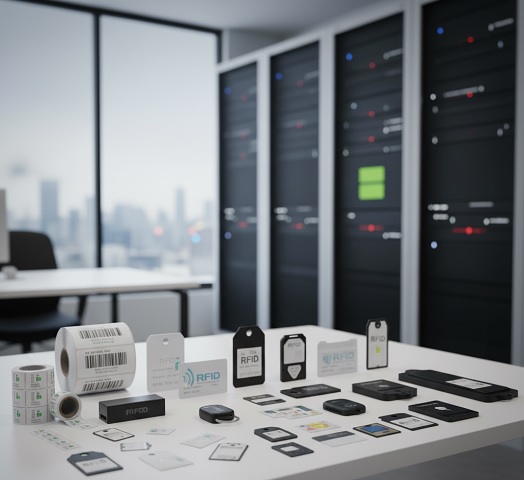
Each product unit was tagged with a passive UHF RAIN RFID label (EPC Gen2) from various vendors (Avery Dennison, CCL eAgile), including special form factors for liquids. Tags were encoded with key GS1-standardized data: GTIN, serial number, lot number, and expiry date.
Hardware Infrastructure
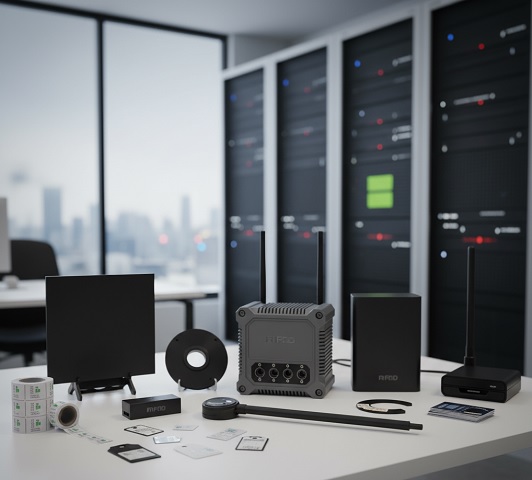
Fixed RFID readers (Zebra) were installed at key points (DC portals, conveyors). Handheld terminals were used for spot verification. The architecture enabled bulk reading of up to 1000+ tags per second at distances up to 10 meters.
Software Platform and Integration
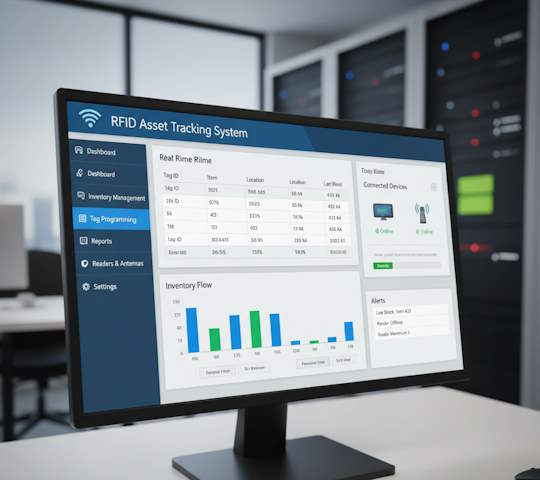
The core of the system was the cloud-based Axia Observer IoT platform, which aggregated EPCIS events from all supply chain partners. This created a single source of truth and enabled seamless real-time data exchange between the independent systems of the manufacturer, distributor, and hospital.
Process After Implementation (As-is / To-be)
| Process | Before (As-is) | After (To-be) |
|---|---|---|
| Receiving/Shipping at DC | Selective or full manual scanning of each box's barcode. High labor costs, error risk. | Instant automatic bulk reading of all RFID tags on a pallet passing through a portal. Data is automatically reconciled with the shipping manifest in the Observer platform. |
| Inventory & Search | Lengthy scheduled inventories requiring work stoppage. Manual, labor-intensive search for a specific unit for recall. | Inventory in minutes using a handheld reader. Instant, precise location of any unit by serial number in the system for targeted recall. |
| Data Exchange in the Chain | Exchange of electronic documents (e.g., 856 ASN) at the batch level. No real item-level visibility for partners. | Automatic sending and receiving of EPCIS events (e.g., 'shipped', 'received') for each unit via the cloud platform. Complete end-to-end visibility. |
| Exception Management | Manual detection of discrepancies, missed expiries, or suspect units, often after the fact. | The Observer platform automatically flags anomalies (data mismatch, expiry) in real-time for immediate response. |
Implementation Results (12–36 months)
- 100% Traceability Accuracy: Achieved perfect end-to-end traceability for all 6,920 units in the real-world testing phase (Phase 2).
- High Read Rates: Tag read reliability reached 98–100% (minimum 96.5% in lab conditions, Phase 1).
- Dramatic Speed Increase: Time for scanning and verification operations reduced by 5–20x compared to manual methods.
- Error Elimination: Errors related to serialization and identification reduced by 70–95%.
- Proven Interoperability: Successful data exchange between systems from different vendors based on GS1 standards, critical for scalability.
Economic Impact and ROI Calculation
The pilot demonstrated significant potential for cost savings when scaling the solution across the supply chain.
- Reduction of Operational Losses: Prevention of losses from counterfeits, accounting errors, and expired stock write-offs is estimated at 30–60%.
- Labor Cost Optimization: Automating inventory, receiving, and shipping can reduce associated labor costs by 40–70%.
- Insurance Against Regulatory Risk: The solution builds an infrastructure for full DSCSA compliance, avoiding potential multi-million dollar fines.
Payback and ROI Forecast: For a full-scale implementation, the payback period is estimated at 24–48 months. The overall return on investment (ROI) over 3–5 years could reach 200–500%, depending on production volumes and the degree of integration with existing ERP/WMS systems.
Sources and Realistic Estimates Card
| Category | Source / Confirmation | Data Type / Note |
|---|---|---|
| Pilot Results | Axia Institute Reports (2023–2025), RAIN Alliance (2025) | Phase 1 (lab) and Phase 2 (real-world), traceability of 6,920 units, 100% accuracy. |
| Technical Standards | GS1 Technical Documents, RAIN RFID Datasheets | Use of EPC Gen2, GS1 encoding (GTIN+serial+lot+expiry), multi-vendor tags. |
| Platform Architecture | Axia Observer Platform Docs, EPCIS publications | Cloud IoT platform for event exchange, interoperability testing. |
| Process Metrics | Industry Reviews, Axia pilot results | Read rates 96.5–100%, bulk scanning 5-20x faster, auto exception detection. |
| Economic Justification | RAIN Alliance Analytics, DSCSA compliance cases | Loss reduction 30–60%, labor reduction 40–70%, ROI 200–500% (scaling estimates). |
Legal and SEO Note
This information is for reference purposes only and is based on public sources. References to trademarks (Avery Dennison, CCL eAgile, GS1, Zebra, etc.) do not imply affiliation. Professional consultation is recommended for adaptation to specific business needs.
Frequently Asked Questions (FAQ)
What makes the Axia Institute Pilot unique?
It is the first industry-wide project that brought together manufacturers, distributors, and technology partners to test end-to-end item-level traceability in real-world conditions using multi-vendor RAIN RFID tags and a cloud-based data exchange platform built on GS1 standards.
What was the key technological outcome?
The pilot demonstrated 100% accuracy for end-to-end traceability in real-world conditions (Phase 2) while processing 6,920 units of various form factors. The system achieved full interoperability among supply chain partners and automated anomaly detection.
What business advantages does this pilot demonstrate for the industry?
The project proved the potential to reduce inventory operational costs by up to 70%, accelerate processes by 5-20 times, and create an infrastructure for guaranteed compliance with future regulatory requirements like the U.S. DSCSA, directly impacting patient safety and reducing financial risks.