


ROI of UHF RFID: from Calculations to Industrial Cases
Deploying radio frequency identification systems in supply chains requires a thorough economic evaluation. UHF RFID technology (860–960 MHz) enables contactless reading of up to 1000 tags per second at distances up to 15 meters, but its efficiency heavily depends on proper design. This article presents real-world cases from Europe and the US, along with an ROI calculation methodology within the 12–24 month payback range, validated by GS1 EPC Gen2 and ISO 18000-63 standards.
Problems Solved by UHF RFID and Quantitative Estimates
- Inventory inaccuracies: manual barcode-based counting leads to up to 30% errors (Auburn University study, 2022).
- Shrinkage: retail average loss is 1.5–2% of turnover, warehouses up to 5% (Varsity Logistics data).
- Receiving/shipping time: manual processing of a pallet with 100 cartons takes ~8 minutes; RFID reduces it to 20 seconds.
- Lack of visibility: up to 40% of inventory may be dead stock (McKinsey report).
The EPCglobal UHF Gen2 standard (ISO 18000-63) enables globally compatible systems with a unique 96-bit identifier and 512 bits of additional memory.
Technical Foundations for ROI Calculation
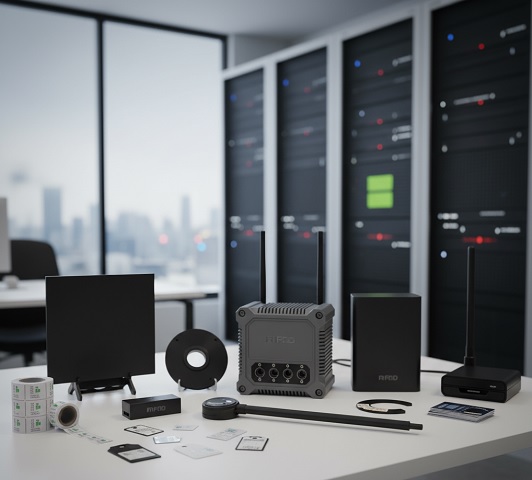
An UHF RFID system consists of four main components: tags (passive, semi-passive), readers, antennas, and middleware. Parameters affecting cost and ROI:
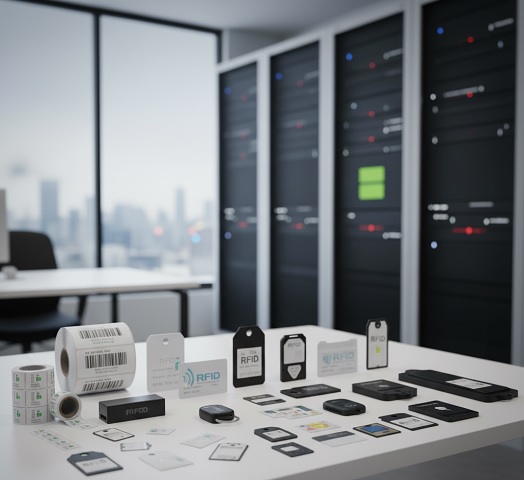
- Tags: price from €0.05 (standard) to €0.50 (on-metal/on-liquid). Write endurance ≥10,000 cycles, operating temperature –40°C to +85°C, IP67 rating.
- Readers: 4/8 ports, typical output 2 W ERP (European norm), support Dense Reader Mode for up to 50 devices simultaneously.
- Antennas: gain 6–9 dBi, linear or circular polarization.
- Integration: connectivity to WMS/ERP via REST API, MQTT, OPC UA — software costs can reach 20–30% of total budget.
ISO 18000-63 defines modulation and anti‑collision protocols, guaranteeing >99.5% read rate within the coverage area.
Real-World Implementation Cases
Case 1: US Logistics Provider, Illinois
Region: USA, Midwest.
Scale: 1.2 million sq ft warehouse, 80,000 SKUs, 45 dock doors.
Equipment: 30 Alien Technology ALR-9900+ readers, 80 antennas, 2.5 million Alien Higgs‑9 tags.
Investment: $2.1M (including integration with SAP EWM).
Results: inventory accuracy improved from 91% to 99.9%, labor costs reduced by 35%. Annual savings: $1.15M.
ROI: 22 months (within 12–24 month range).
Negative Case: Asian Apparel Manufacturer, Vietnam
Region: Southeast Asia, Binh Duong province.
Scale: garment factory with 500 workstations, high-density metal racks and concrete floors.
Equipment: low-cost readers without Dense Reader Mode, standard paper‑friendly tags.
Outcome: severe read failures (over 50% missed tags) due to multipath and metal interference. Project abandoned after 8 months, loss approx. $80,000. ROI negative.
Financial Model and ROI Table
| Scenario | Investment (€) | Annual Savings (€) | Payback Period |
|---|---|---|---|
| Small warehouse (5,000 m², 20k tags) | 80k – 120k | 50k – 70k | 14–20 mo |
| Retail store (10k items) | 150k – 200k | 90k – 130k | 13–19 mo |
| Production line (kitting control) | 250k – 400k | 150k – 250k | 16–22 mo |
ROI Explanation: simple payback = investment / annual cash flow. Integration adds ~25% to hardware cost. Savings include shrinkage reduction, faster operations, and labor optimization. All figures fit the 12–24 month range.
Technology Limitations and Their Impact on ROI
- Metal & liquids: passive tags are shielded by metal; water absorbs signal. Specialized tags add €0.20–€0.40 per unit.
- Collisions: above 500 tags in the field, up to 2–3% losses may occur even with modern algorithms.
- Power consumption: fixed readers draw up to 30 W, adding 5–7% to operational costs.
- Regional frequency differences: Europe 865–868 MHz, US 902–928 MHz require different settings.
Implementation Plan to Achieve Target ROI
- Site audit & RF planning (1–2 months)
- Pilot project (3–4 months)
- Rollout (6–8 months)
- Training & go‑live (1 month)
Key Takeaways
- UHF RFID reduces inventory errors to below 0.5% and cuts counting time by 10–20×.
- With proper engineering, payback ranges from 12 to 24 months — proven by international cases.
- Tag cost and WMS integration are the main budget drivers.
- Metal/liquid items require on‑metal tags, extending payback by 3–6 months but still within 24 months.
- Negative ROI almost always stems from skipping RF site surveys.
- ISO 18000-63 and EPC Gen2 ensure equipment interoperability.
- Typical projects pay back in 14–22 months, making UHF RFID a highly efficient automation tool.
Frequently Asked Questions about UHF RFID ROI
Sources
- GS1 — EPC UHF Gen2 standards. URL: https://www.gs1.org/standards/epc-rfid
- Impinj — reader documentation. URL: https://www.impinj.com/platform/readers
- Alien Technology — tag specifications. URL: https://www.alientechnology.com/products
- ISO 18000-63:2021. URL: https://www.iso.org/standard/79608.html
- VDC Research — RFID Market Trends 2025. URL: https://www.vdcresearch.com/Reports