


Where RFID pays off and where it doesnt: ROI analysis and limitations
UHF RFID (860–960 MHz, EPC Gen2 / RAIN RFID standard) is no longer an experimental technology. The price of a passive tag in bulk purchases has dropped below $0.04, and readers have become more affordable. However, commercial success depends not on equipment cost but on choosing the right scenario. This article covers where the technology delivers measurable ROI and where investments are not justified.
✅ Where RFID demonstrates measurable ROI
🎢 Amusement parks & campgrounds
RFID wristbands for cashless payments: guests link a card to the wristband and pay with a tap. Result: 15–30% increase in per-guest spending due to impulse purchases, reduced queues (transaction <2 seconds vs 15–45). Payback within one peak season.
🏬 Sports retail (private label)
Decathlon Brasil: RFID rollout in 50 stores. 50% reduction in self-checkout time, 3% improvement in inventory accuracy, 38% increase in inventory productivity. Key factor: 100% private-label goods, full supply chain control.
🏥 High-value asset tracking
Medical equipment, tools, IT assets. After RFID implementation, one company reduced audit time from 9 person‑months to a few weeks; payback under 12 months.
📦 Always‑on RFID in stores
American Eagle, Old Navy, Fabletics are deploying overhead real‑time systems. Benefits: heat maps, customer journey analysis, shrinkage reduction, 100% floor visibility. Technology moves from "luxury" to achievable ROI.
| Sector | Key effect | ROI period |
|---|---|---|
| HoReCa / parks | +15–30% revenue per guest, shorter queues | 1 season |
| Retail (private label) | -50% checkout time, 99% accuracy | 12–18 mo |
| Healthcare / assets | loss reduction, 50% audit time saved | 6–12 mo |
| Manufacturing | early defect detection, parts tracking | 12–24 mo |
❌ Where it consistently fails: typical pitfalls
🧱 Physical limitations
- Metal and liquid: UHF signals reflect off metal and are absorbed by water. Without specialized metal‑mount tags or protection, reading is impossible.
- Dense packing: high tag density causes collisions; requires fine‑tuning.
🏗️ Infrastructure traps
- Automating disorder: if the warehouse is not structured, RFID only captures the chaos, it does not fix it.
- Fragmented chain: full benefit only with end‑to‑end control (manufacturer → shelf).
📉 Economic mistakes
- Tagging cheap goods: labeling a $1 item with a $0.04–0.10 tag is pointless unless the tag is reused.
- Ignoring total cost of ownership: readers, servers, software, integration, and training may exceed tag cost.
📋 Checklist: is your business ready for RFID?
- ✔️ Items do not contain critical amounts of metal/liquid, or tags are correctly selected
- ✔️ Unit value > $5–10 (or you have returnable containers / assets)
- ✔️ Warehouse/store processes are standardized
- ✔️ Willingness to train staff (50+ years is not a problem if the interface is simple)
- ✔️ Total cost of ownership has been calculated, not just tag price
📡 Technical aspects affecting economics
Understanding UHF physics helps avoid unnecessary costs:
- 860–960 MHz range: provides up to 5–10 m read range but strongly depends on material. Metal requires special spacer tags.
- EPC Gen2 / RAIN: global standard ensuring interoperability across vendors.
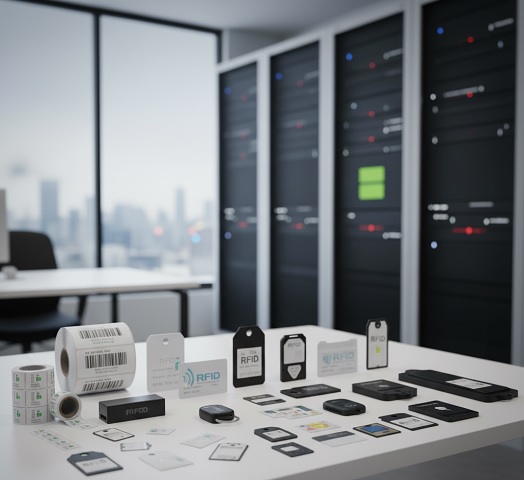
- Tag types: passive (no battery, low cost), active (battery‑powered, for containers), semi‑passive.
- Collisions: modern readers handle up to 1000 tags/sec, but dense flows require configuration.
❓ Frequently Asked Questions
📚 Sources and references
- Insider Perks — RFID wristbands: +30% sales in parks
- Sensormatic — Decathlon Brasil: -50% checkout time
- SATO — tag cost and types overview
- ITWeek — RFID is not simple
- FM Logistic — benefit only with end‑to‑end control
- Barcodes Inc. — asset tracking ROI: 6–12 months
- BarTender — prices below $0.04, payback <12 mo
- Softline — 5 pitfalls of RFID