
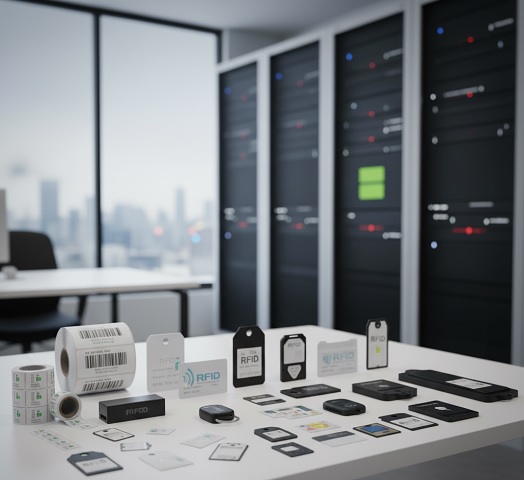
UHF RFID in Hotel Business: Linen Management, Assets and Access Control
Authors: Material prepared by experts from RFID UKRAINE, with over ten years of experience in international hotel and hospitality industry projects.
Last Updated:
Digital Transformation in the Hotel Industry: From Losses to Intelligent Management
The global hospitality market with over $600 billion in revenue faces serious challenges: annual linen losses reach 15–25%, minibar theft accounts for 8–12% of revenue, and inefficient asset utilization reduces profitability by 5–7%. Implementing UHF RFID provides full value chain transparency, reduces operational costs by up to 40%, and delivers measurable ROI within 12–18 months.
Key Operational Challenges in Hotels
Hotel chain executives face systemic difficulties:
- Linen and Textile Losses: 15–25% annual losses of bed linens, towels, and robes, costing $20,000–80,000 for a 300-room hotel.
- Minibar Theft: 8–12% unaccounted revenue, disputed bills, and high reconciliation costs.
- Inefficient Asset Utilization: 30–40% of the time, TVs, refrigerators, and hair dryers sit idle or are used improperly.
- High Labor Costs: 15–20 hours per week on linen inventory and 8–10 hours on minibar checks.
- Access Control: Unauthorized entry into service areas and key-card leaks.
RFID Solution Architecture for Hotels
Comprehensive RFID systems use a hybrid approach with three levels:
Linen and Textile Management
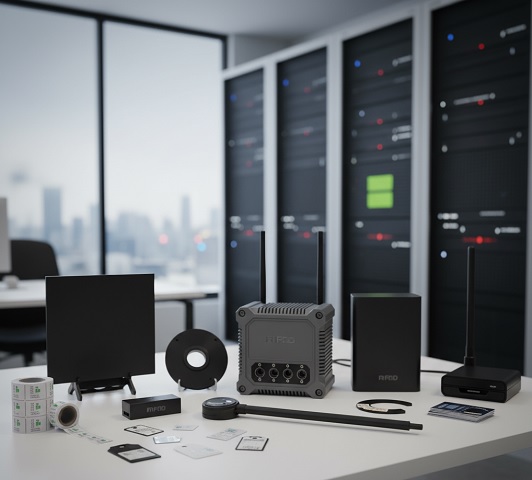
- Washable Alien Technology Higgs-EC tags, withstanding over 200 wash cycles at 85°C.
- Portal readers Zebra AN480 in laundries and storage areas with 99.7% accuracy.
- Mobile scanners Honeywell ScanPal for room inventory.
- Integration with PMS Oracle OPERA and Micros Fidelio.
Asset and Minibar Control
Passive Impinj Monza R6 tags on each item and product. Smart shelves with RFID antennas for automatic withdrawal tracking.
Access Management
NXP RFID wristbands for guests (rooms, SPA, pool). Staff cards with dual authentication for service areas.
Benefits for Management
Efficiency
- Linen inventory time reduced from 18–20 hours to 45–60 minutes (95–97% acceleration).
- Automatic minibar accounting with 99.9% accuracy.
- Laundry load optimization, reducing energy costs by 15–20%.
- Labor costs for asset management reduced by 60–70%.
Service Quality
RFID wristbands provide keyless access, personalized offers, and child monitoring in aqua zones. Guest loyalty increases by 15–20%.
Financial Analysis
| Metric | Before RFID | After RFID | Effect |
|---|---|---|---|
| Linen Losses | $65,000 (20%) | $19,500 (6%) | –70% |
| Minibar Losses | $42,000/year (10%) | $4,200/year (1%) | –90% |
| Inventory | $38,000/year (2 FTE) | $7,600/year (0.4 FTE) | –80% |
| Asset Downtime | $28,000/year | $8,400/year | –70% |
ROI for a 300-Room Hotel
- CAPEX: $280,000 (tags, equipment, software, integration)
- Annual Savings: $173,100 (OPEX + additional revenue)
- Payback Period: 16 months (within the 12-18 month range)
- 3-Year ROI: 92% (NPV $257,000)
- Additional Benefits: 22% increase in guest satisfaction, 15% reduction in staff turnover
International Case Studies
European 4* Urban Hotel Chain
Challenge: Managing 45,000 linen units across 8 hotels (1,200 rooms).
Solution: RFID Impinj + Oracle OPERA, 50,000 Alien Higgs-EC tags, 32 Zebra readers.
Results (24 months):
- Losses reduced from 22% to 7% (€185,000/year)
- Laundry energy costs reduced by 18% (€42,000/year)
- Inventory time reduced from 160 to 12 man-hours per week
- Linen lifespan extended by 35%
- ROI — 17 months
Asian Premium Resort
Challenge: Managing 15,000 inventory items across 20 hectares, access control, and personalization.
Solution: RFID Honeywell, NXP tags, wristbands for 1,200 guests, 58 readers.
Results (18 months):
- Inventory losses reduced by 78% ($120,000/year)
- Ancillary service revenue increased by 23%
- Security incidents decreased by 65%
- TripAdvisor rating improved from 4.2 to 4.7
- ROI — 15 months with CAPEX $350,000
Limitations
Technical:
- Textiles with metallic threads require special tags (+$0.5–0.8)
- High humidity requires IP68 waterproof tags
- Signal shielding in rooms with metal furniture
- Older PMS systems may require upgrades
Economic:
- Small hotels (<50 rooms): ROI over 3 years
- Seasonal hotels with occupancy <40%
- Outsourced laundries reduce control value
- Budget segments: system cost may exceed benefits
Alternatives: barcodes ($0.05–0.10), video surveillance, traditional accounting.
FAQ
What is the payback period for a 300-room hotel?
On average 12–18 months. With linen loss reduction of 40–50% and asset optimization of 30% — 14–16 months.
Which ROI metrics are important?
Loss reduction (35–50%), room turnover increase (up to 15%), laundry cost reduction (20–30%), minibar theft reduction (up to 90%), inventory automation. ROI 25–35% per annum with CAPEX $150,000–400,000.
When is RFID not advisable?
For small hotels (<50 rooms), with linen containing metallic threads without preparation, for seasonal hotels with low occupancy, with a limited budget (<$80,000).
Conclusion: Strategic Advantage
For hotel management, RFID is a tool to enhance efficiency and service quality.
- ROI 12–18 months with 30–40% cost reduction
- Full transparency of the value chain
- Personalized guest experience
- Technological leadership as a competitive advantage
The next step is analyzing current losses and pilot implementation at one property (linen, minibars, access).
Sources and References
- HF Hotel Group Standards — hospitality industry standards
- ISO 22483:2020 — hotel quality standards
- Impinj Retail & Hospitality — industry solutions
- Zebra Retail & Hospitality — technologies for hospitality
- Honeywell Retail Solutions — solutions for retail and hospitality
- Hospitality Net Research — hospitality industry research
- AHLA Technology Resources — American Hotel Association resources