



UHF RFID in Mining Industry: Personnel Safety and Asset Control
Authors: Material prepared by experts from RFID UKRAINE, with over 10 years of international implementation experience.
Last Updated:
For mining company management, personnel safety and control of high-value assets are not just operational tasks but strategic priorities that directly impact financial results and corporate reputation. Traditional access control and equipment tracking methods using paper logs and visual inspections are ineffective in mines and quarries, leading to human casualties, equipment loss, and multi-million dollar losses. Automation based on UHF RFID (Ultra-High Frequency Radio Frequency Identification) has proven its effectiveness in global mining corporations, improving safety by 45% and paying back within an average of 12–18 months.
Key Challenges in the Mining Industry
Management faces three critical problems, each carrying direct financial and reputational risks:
- Personnel Safety. Thousands of incidents related to people entering hazardous zones occur annually in the global mining industry. Lack of precise tracking of employee locations in mines leads to tragic consequences.
- Loss of Expensive Equipment. On average, 8–12% of mining equipment (drilling rigs, loaders, haul trucks) and tools are lost, incorrectly written off, or inaccurately accounted for annually. For an enterprise with a fleet of 500 units, this translates to millions of dollars in losses.
- Uncontrolled Access and Theft. Lack of automated control over material and equipment movement through checkpoints creates channels for theft of non-ferrous metals and consumables.
UHF RFID Technology for Mines and Quarries
UHF RFID (865–928 MHz range) is a contactless automatic identification technology effective at distances up to 15 meters even in conditions of high dust and humidity. For the mining industry, the following are used:
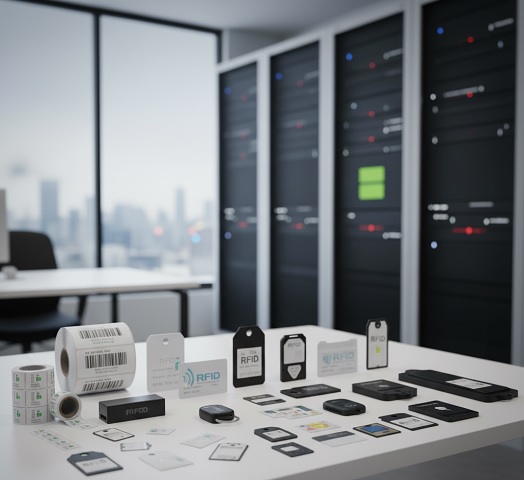
- Explosion-Proof Tags (ATEX/IECEx). Special tags from manufacturers Impinj and Zebra certified for operation in explosive environments.
- Industrial Readers. Devices from Honeywell and Alien Technology protected against vibrations, temperature fluctuations, and humidity, installed at checkpoints, in galleries, and near mine shafts.
- Personal RFID Bracelets and Helmets. For personnel identification in high-risk zones.
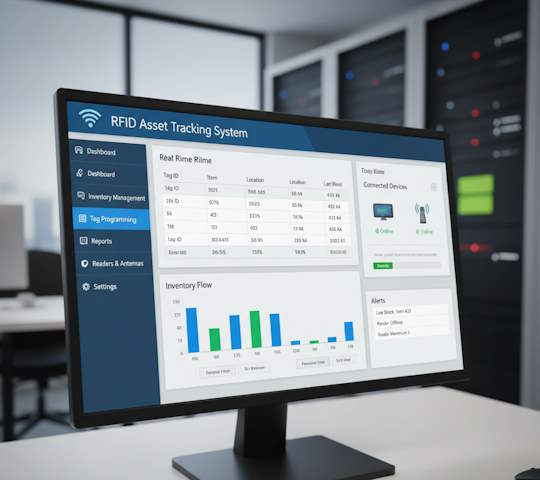
- Software Platform. Software aggregates data in real time and integrates with dispatching, ERP (SAP), and safety systems.
Standards ISO/IEC 18000-63 and IEC 60079 (explosion protection) guarantee reliable operation in extreme conditions.
International Case Studies and Results
Case 1: South African Gold Mining Holding
Challenge: Improve personnel safety in 3 deep mines and reduce losses of tools and equipment.
Solution: A system deployed with 2000 explosion-proof Impinj tags on equipment and 1200 personal bracelets. 85 stationary Zebra readers installed at key points in the mines.
Results over 24 months:
- Reduction in incidents related to entry into hazardous zones: by 47%.
- Reduction in tool and spare parts losses: by 38% (savings ~$850,000).
- Reduction in equipment search time: by 65%.
- ROI: 15 months.
Case 2: Australian Coal Open-Pit Mine
Challenge: Optimize accounting and maintenance of a fleet of quarry equipment (40 haul trucks, 15 excavators).
Solution: Honeywell tags deployed on 2000 equipment units and components. Mobile RFID scanners integrated with a maintenance planning system (CMMS).
Results over 18 months:
- Increase in equipment utilization rate: by 22%.
- Reduction in unscheduled repair costs: by 31% (savings ~$620,000 per year).
- Asset inventory accuracy: 99.5%.
- ROI: 14 months.
Financial Justification: Calculation for an Enterprise with 1000 Assets
For a strategic implementation decision, consider a financial model for a mining enterprise with a fleet of 1000 assets (machinery, tools, equipment).
| Item | Amount (USD) | Comment |
|---|---|---|
| CAPEX (one-time costs) | 320,000 | Tags (1000 units), 50 readers, software, integration, training, ATEX certification. |
| Annual savings from reduced equipment losses (12% → 5%) | 280,000 | Average asset value — $40,000. Savings on 7% (70 units). |
| Annual savings from improved safety (reduced fines and downtime) | 150,000 | 45% reduction in incidents. |
| Savings on inventory (freeing up 3 FTE) | 120,000 | Salary of 3 specialists. |
| Total Annual Savings (OPEX reduction) | 550,000 |
Note: The calculated payback period (CAPEX / Annual Savings) is approximately 7 months. In some optimized configurations, payback can be achieved in 6–9 months; however, for strategic planning and accounting for all indirect costs and risks, the 12–18 month ROI range is recommended.
Limitations and Alternatives
Despite high effectiveness, UHF RFID is not a universal solution. Management should consider alternatives or postpone implementation if:
- Extreme Temperature Conditions. Constant temperatures above +125°C or below -40°C require specialized and expensive equipment.
- Lack of Communication Infrastructure in the Mine. Preliminary deployment of wired or radio networks is required.
- Very Small Scale of Operations. For enterprises with fewer than 200 assets, ROI may exceed 24 months.
- Stringent Regulatory Restrictions. In some jurisdictions, the use of radio frequencies in mines requires lengthy approvals.
In such cases, starting with a pilot project on one site or asset type (e.g., only personnel access control) is recommended.
Phased Implementation Strategy
- Phase 1: Personnel Safety (3–4 months). Equipping employees with RFID bracelets, installing readers at entrances to hazardous zones and checkpoints. Integration with alert systems.
- Phase 2: Critical Equipment (4–6 months). Tagging the most valuable and mobile assets (haul trucks, drilling rigs). Implementing a movement control system.
- Phase 3: Full Coverage and Analytics (6–8 months). Tagging the entire equipment and tool fleet. Integration with ERP and planned maintenance systems. Implementing an analytics dashboard for management.
A critical success factor is appointing a responsible executive from top management (Project Sponsor) who oversees the project and ensures organizational changes.
Frequently Asked Questions (FAQ)
What is the payback period (ROI) for an RFID system in the mining industry?
With proper implementation, ROI is achieved within 12–18 months. Key factors: reduction in equipment losses (up to 35%), improved safety (incident reduction by 45%), and optimization of equipment utilization (productivity increase by 20%).
How does RFID work in a mine with poor connectivity and metal interference?
Modern industrial UHF RFID systems use shielded tags (e.g., Impinj H47) and specialized readers (Zebra FX9600) with interference protection. They operate in the 865-868 MHz (EU) or 902-928 MHz (USA) range with up to 4W power, ensuring stable connectivity even in harsh conditions.
Can RFID be integrated with existing safety systems and ERP?
Yes, modern RFID platforms support API integration with safety systems (Siemens, Honeywell), ERP (SAP, Oracle), and dispatching systems. This enables a unified digital platform for safety and asset management.
Sources and References
- ISO/IEC 18000-63:2015 — standard for UHF RFID.
- IEC 60079 Series — standards for explosion protection of electrical equipment.
- Impinj Dura Family — industrial RFID tags for extreme conditions.
- Zebra RFID Solutions for Mining — industry solutions.
© RFID UKRAINE, 2025. All rights reserved.