



RFID in Agriculture and the Food Industry: From Farm to Fork
In the modern world, where food safety, supply chain transparency, and efficient resource use are paramount, technology is becoming the key driver of change. Among these, Radio Frequency Identification (RFID) is showing impressive results, transforming traditional approaches in agribusiness and the food industry. This technology creates a digital bridge between physical objects—from a live animal on the farm to a packaged product in the store—and information systems, ensuring an unprecedented level of control and traceability along the entire "Farm to Fork" path.
What is RFID and How Does It Work in the Agricultural Sector?
RFID (Radio Frequency Identification) is an automatic wireless identification technology that uses radio waves. Its main advantage over traditional methods, such as barcodes, is the ability to perform contactless data reading without the need for line-of-sight, as well as the capacity for the simultaneous scanning of dozens and hundreds of objects.
The key components of an RFID system include:
-
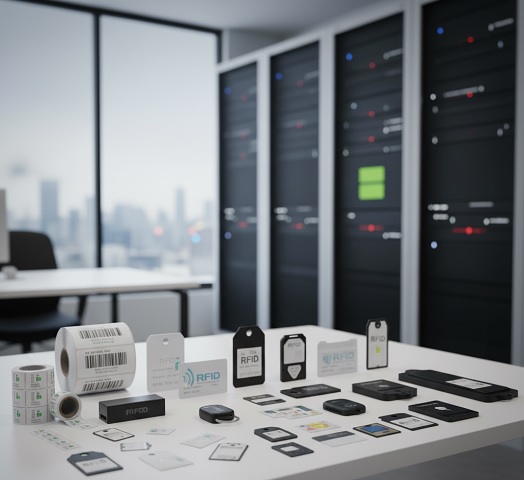
Tags (Transponders): Microchips with an antenna that are attached to objects. They can be passive (require no internal power), active (with an integrated power source for longer range), or semi-passive.
-
Readers (Interrogators): Devices that generate a radio frequency field, "interrogate" the tags, and retrieve data from them. They can be stationary (installed at gates) or mobile (handheld terminals).
-
Data Management System: Software (Middleware) that processes information from the readers, integrates it with other systems (ERP, WMS, GIS), and provides analytics for decision-making.
In the agri-food sector, tags across different frequency bands are used, optimized for specific tasks: Low Frequency (LF) for animal identification, High Frequency (HF) for close-range access control, and Ultra High Frequency (UHF) for bulk scanning of packaging, equipment, and large product batches over greater distances.
Key Applications of RFID in Agriculture
Smart Livestock Farming
RFID fundamentally changes the approach to herd management, turning every animal into a source of valuable data.
-
Individual Tracking and Health Control: RFID ear tags (LF 134.2 kHz) allow for an electronic "passport" for each animal. This records vaccination history, disease data, diet specifics, and reproductive cycles. This enables the farmer to quickly identify sick animals, isolate them, and increase the biosecurity of the entire herd to 99%.
-
Process Automation: In dairy farming, milking robots identify the cow by scanning the tag, automatically determine the required feed quantity, and register milking yields. Similarly, feeding systems dispense feed according to each animal's individual needs, which, according to studies, increases productivity by 5-10%.
Precision Agriculture and Crop Management
The technology elevates the control of crop cultivation and resource management to a new level.
-
Labeling and Monitoring Perennial Crops: Fruit trees and grapevines are tagged using UHF tag seals that cannot be easily removed. This allows for precise accounting of all operations: irrigation, pruning, spraying, and fertilization for each plant.
-
Storage Condition Control: In grain and vegetable storage facilities, RFID tags integrated with sensors continuously monitor temperature and humidity, helping prevent crop spoilage.
Equipment and Inventory Management
RFID helps optimize the use of expensive assets and reduce operational costs.
-
Farm Equipment Tracking: Tagging tractors, combines, and attachments allows for tracking their location, operating hours, fuel consumption, and maintenance schedules. This reduces downtime and prevents unauthorized use.
-
Returnable Transport Items (RTI) Control: Tags on baskets, crates, and boxes for fruit and vegetable produce allow their movement to be tracked and rotation optimized, reducing losses by up to 40% compared to manual counting.
RFID in the Food Industry: Transparency and Safety
Traceability in the Meat Supply Chain
One of the most striking examples is the "stable-to-shelf" traceability system for meat products.
-
End-to-End Control: An animal with an ear tag proceeds to processing. Its meat carcass is then hung on a trolley hook with a special RFID tag designed to withstand extreme temperature fluctuations. This tag accompanies the half-carcass through all stages: butchering, weighing, and freezing. All parameters are automatically recorded in the system.
-
Automated Accounting: Upon shipment to the retail network, the system instantly generates a label for the packaging based on the tag data, containing the entire product history and ensuring data accuracy up to 99.9%.
Management of Kegs and Returnable Packaging
For beverage manufacturers, RFID has become an indispensable tool for controlling multi-use packaging.
-
Beer Keg Labeling: Each keg is assigned a unique RFID tag identifier. Information about the contents, batch number, filling date, client, and return deadlines is linked to it in the system. This method of accounting is highly efficient and prevents the loss of expensive packaging.
Food Safety and Quality Control
The technology ensures compliance with strict food safety standards.
-
Cold Chain Monitoring: For perishable products such as meat, milk, fruits, and vegetables, RFID tags with built-in temperature sensors are used. They continuously register the temperature regime throughout the entire transportation process. If the temperature deviates from the norm, the system generates an alert, allowing measures to be taken to prevent spoilage.
-
Reducing Food Waste: In retail, RFID helps accurately track product expiration dates, ensuring timely disposal and reducing losses, which enhances business sustainability.
Integration with Management Systems and Global Trends
The maximum effectiveness of RFID is achieved when integrated into a broader ecosystem of digital technologies.
-
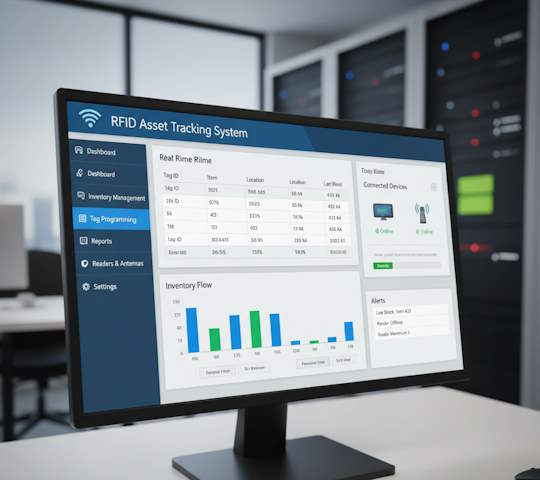
Asset Management Platforms: Data from RFID tags flows into specialized software that consolidates information and presents it in the form of interactive dashboards for analysis and strategic decision-making.
-
Blockchain Integration: Creating an immutable and decentralized history of product movement, where each stage is recorded in a distributed ledger. This provides the highest level of trust and transparency for all supply chain participants and end consumers.
-
Artificial Intelligence and IoT: AI algorithms, analyzing large datasets from RFID tags and other IoT sensors (soil moisture, air composition, etc.), can forecast yields, optimize irrigation schedules, and identify anomalies in animal health status.
Global Experience and Regulation: The implementation of RFID in the agro-industrial complex is actively encouraged at the state level in many countries. For example, the U.S. Department of Agriculture (USDA) advocates for the use of RFID for animal identification and food traceability. According to RAIN Alliance reports, 52.8 billion RFID chips were sold globally in 2024, demonstrating a 54% growth over two years and highlighting the rapid spread of the technology.
Conclusion
RFID is not just an identification tool; it is the cornerstone of the digital transformation of the entire agro-industrial complex. The technology provides unprecedented transparency, operational efficiency, and safety throughout the entire path from farm to fork. Investments in RFID pay off by reducing losses, optimizing resources, increasing consumer trust, and complying with stringent international standards.
Implementing RFID systems allows agriculture and the food industry to be transformed into a high-tech, data-driven sector, ready to meet the growing needs of the global market for safe, high-quality, and transparently produced food.
❓ Frequently Asked Questions (FAQ)
1. What are the main RFID standards for livestock farming?
The main international standard for identifying cattle and other agricultural animals is Low Frequency (LF) RFID at 134.2 kHz. This standard ensures reliable reading at close range, which is critical during milking, feeding, and weighing. Tags comply with ISO 11784 and ISO 11785 standards.
2. How do RFID tags withstand harsh food industry environments?
Special industrial-grade tags are used in the food industry that:
-
Withstand temperature extremes from -40°C (freezing) to +250°C (thermal processing).
-
Are resistant to aggressive cleaning agents and high humidity levels.
-
Have an IP67/IP68 protection rating and can be embedded in metal hooks, containers, or kegs.
3. How accurate is "Farm to Fork" traceability using RFID?
Thanks to the end-to-end use of unique RFID identifiers, traceability accuracy reaches 99.9%. This eliminates the human factor and errors typical of manual data entry or barcode scanning. In the event of a product recall, the system locates the source of contamination in minutes, not days.
4. What is the average ROI (Return on Investment) for RFID in the agri-sector?
The payback period (ROI) for RFID projects in agriculture and the food industry typically ranges from 18–36 months. The main factors driving savings include:
-
Reduction in loss of returnable transport items (kegs, crates).
-
Optimization of feeding and increased animal productivity.
-
Reduction of waste and food spoilage through precise cold chain monitoring.
📚 Authoritative Sources and Resources
🌍 International Organizations and Standards
- USDA (U.S. Department of Agriculture) — official requirements and recommendations for the use of RFID for livestock identification and food traceability
- RAIN RFID Alliance — technical documentation, global reports, and statistics on RFID implementation in various industries
- FAO (Food and Agriculture Organization of the United Nations) — research on the role of technology in improving food security and agricultural sustainability
- GS1 Global — international standards for RFID and barcodes in the food supply chain
📊 Research and Analytical Agencies
- Zebra Technologies Insights — case studies and reports on the application of RFID for cold chain monitoring and asset management in the food industry
- IDTechEx — market research and forecasts for the RFID segment in the agro-industrial complex