

Boehringer Ingelheim — Sterile Zone Automation: Autoclave‑resistant RFID
Engineering Challenge
In Boehringer Ingelheim’s sterile manufacturing areas, containers (stainless steel, glass) must endure more than 200 autoclave cycles (steam at 134°C, 3 bar) and repeated exposure to H₂O₂ vapor (30% concentration) during decontamination. RFID tags need IP69K protection, gamma radiation resistance (25 kGy), and reliable operation inside metal isolators. The target read accuracy is 99.9% without manual intervention. Frequency choice: UHF (865–868 MHz) for long range, but tags must be designed for on-metal mounting.
Protocol / System Architecture
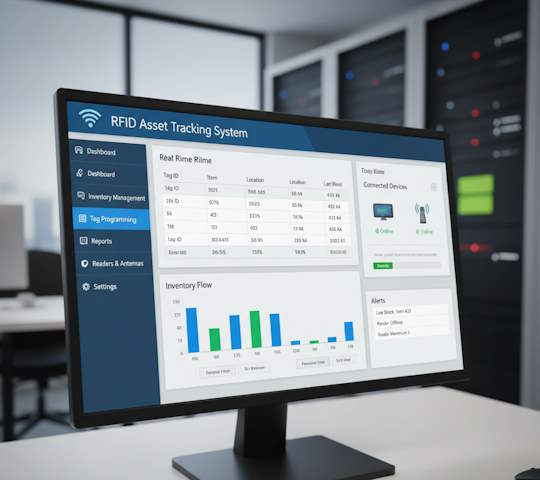
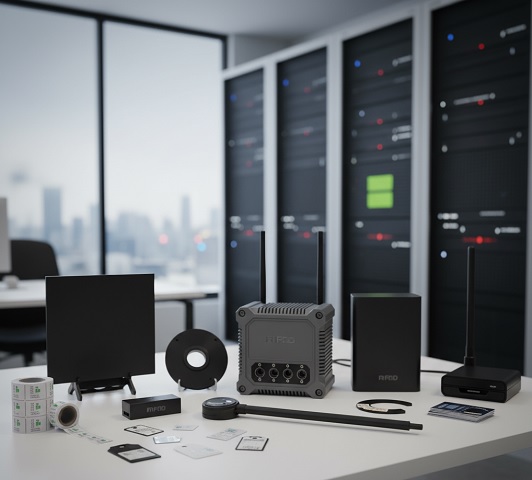
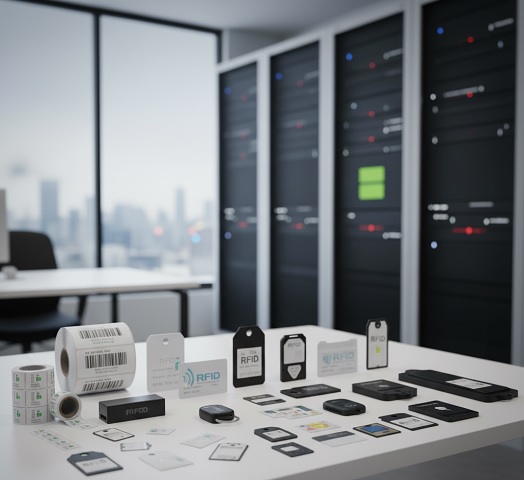
The system uses ISO/IEC 18000-63 UHF tags encased in PEEK (polyetheretherketone) with a ferrite layer to decouple from metal. Readers are installed at entry/exit points of sterile corridors, operating at 2 W ERP with circularly polarized antennas (9 dBi). Data is transmitted via Ethernet to a tracking system that logs each container’s sterilization history. Anti-collision uses dynamic Q (Q=8–12) to handle up to 50 containers simultaneously. The tags store cycle count and last sterilization date.
Field Deployments
Boehringer Ingelheim (Darmstadt) — Sterile filling line
Over a 12‑month period, 5,000 autoclave containers were fitted with PEEK‑encased UHF tags. After 250 autoclave cycles, 99.9% of tags remained fully readable (read range 2.5 m on metal). The system eliminated manual barcode scanning, saving 30 minutes per shift. H₂O₂ exposure had no measurable effect on tag performance. Throughput: 100 containers/hour.
Boehringer Ingelheim (Ingelheim) — Gamma sterilization trial
During a gamma irradiation test (25 kGy), a small batch of tags (2%) showed epoxy discoloration and a 0.5 dB increase in return loss, reducing read range from 3 m to 1.8 m. After investigation, the epoxy formulation was changed to a radiation‑stabilized grade. The updated tags passed subsequent tests with 99.9% success. The initial batch was considered a partial failure.
Implementation Trade-offs
| Parameter | Legacy (barcode + manual log) | Autoclave‑resistant RFID |
|---|---|---|
| Cycle life | Labels peel off after ~50 cycles | >250 cycles |
| Read reliability | Manual errors (estimated 2%) | 99.9% automated |
| H₂O₂ resistance | Paper labels degrade | PEEK + epoxy withstand |
| Cost per container (tag) | 0.10 € (label + labour) | 2.50 € (reusable tag) |
Design Decision Matrix
- Sterilization durability: PEEK housing + high‑temp epoxy ensures >250 autoclave cycles.
- Chemical resistance: Sealed design prevents H₂O₂ ingress.
- On‑metal performance: Ferrite layer maintains read range on stainless steel.
- Automation: 99.9% read rate eliminates manual checks in cleanrooms.
Technical Clarifications
Standards & Technical References
- ISO/IEC 18000-63
- ISO 11137 – Sterilization of health care products (gamma)
- IEC 60529 – IP69K rating
- ASTM E2316 – Test method for H₂O₂ sterilization