



Technical Assessment of DTB RFID: Analysis of a Typical Mid-Range Chinese UHF Solutions Provider
DTB RFID is a characteristic representative of the segment of Chinese manufacturers that position themselves as full-cycle RFID solution providers. Analysis of their offering reveals a model typical for this segment: an emphasis on broad industry coverage, work with ready-made components from market leaders (NXP, Alien), and marketing declarations about partnerships with large businesses.
Positioning vs. Real Specialization
Claiming to be the "Worldwide Leading Provider," the company actually occupies the niche of a mid-range OEM/ODM manufacturer. Its model is built not on deep patented technology (like Xerafy's with metal) but on the integration of ready-made, quality components into products for mass market segments.
Key Offering Parameters
What the Company Actually Offers
Access to Quality Components: Working with NXP, ST chips, implementing Alien Technology solutions — this is the main technological advantage ensuring reliable baseline product performance.
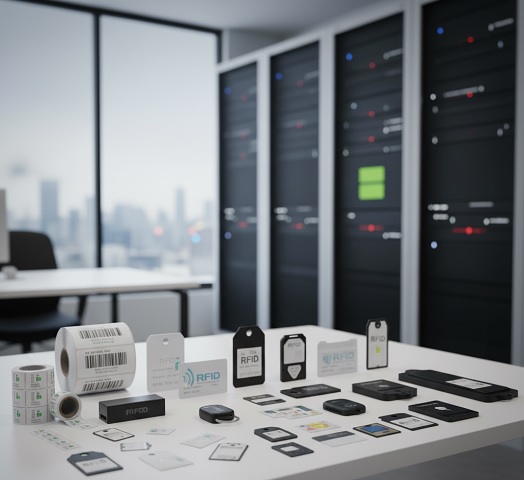
Wide Range of Form Factors: The ability to produce various types of tags (including eco-lines from wood, PLA) for standard applications.
Industry-Specific Solution Packaging: Marketing structuring of products for retail, logistics, and library tasks, simplifying the choice for the end customer.
System Limitations and Trade-offs
Lack of Deep Specialization: The company is not an expert in extreme conditions (ultra-high/low temperatures, chemical aggression, vacuum). Its products are designed for standard commercial and industrial environments.
Dependence on Supply Chains and Partner Know-How: Key technologies (chips, antenna designs) are external. This limits opportunities for creating truly unique products.
"Partnership" as a Marketing Construct: The claim of cooperation with Fortune 500 requires verification. Typically, such work is conducted through multi-level integrators, limiting DTB's direct access to vendor-independent feedback from the end user.
Technical Limitations: Assumed Parameters
Based on positioning in retail, logistics, and library segments, conclusions can be drawn about the typical operational boundaries for this class of products.
| Parameter | Assumed Range / Characteristic | Comment |
|---|---|---|
| Temperature Range (passive UHF tags) | -25°C to +70°C (some models up to +85°C) | Standard for commercial tags. Not for cryogenics, injection molding, or work near furnaces. |
| Read Range | Up to 10-12 m (depends on chip and antenna) | Typical for UHF Gen2. Not a solution for very long-range (20+ m) systems. |
| Environmental Protection | IP54 - IP67 (for specific series) | Dust and splash protection. Not for permanent immersion in aggressive liquids or operation under high pressure. |
| Performance on Metal | Special on-metal tags in the assortment | Uses standard design solutions (ferrite layer). Not the company's specialization. |
| Tag Lifespan | 5-10 years (under standard conditions) | Determined by assembly and material quality. For critical applications, confirmed tests are required. |
Standards and Certification: Possession of ISO 9001 is a basic requirement for any serious supplier, not a competitive advantage. Claimed membership in the RAIN Alliance and NFC Forum indicates protocol compliance but does not guarantee leadership in performance.
Industry Application: Where Solutions Are Relevant
DTB RFID products are a typical choice for projects with medium technical requirements and budget sensitivity.
| Application Scenario | Relevance of DTB Solutions | Critical Remarks |
|---|---|---|
| Retail Item Tagging (apparel, footwear) | High. Wide selection of stickers and fabric labels. | The competitive field is vast. Price and supply reliability are key selection factors. |
| Pallet and Tote Management in Logistics | Medium-High. Reliable UHF tags for non-demanding environments. | For impact loads, extreme temperatures, or outdoor use, specialized vendors are required. |
| Library Systems, Document Management | High. Standard HF/UHF solutions. | A technologically trivial task for any mid-level manufacturer. |
| Industrial Asset Tracking in a Workshop | Limited. For clean, temperature-stable zones. | Not for foundries, machining with coolants, outdoor oil & gas installations. |
Conclusions for the Practicing Engineer
DTB RFID is a supplier of typical RFID solutions of satisfactory quality for the mass market. It is more accurate to view them not as a technology leader but as a balanced option in the "price/quality/supply reliability" segment.
When It Makes Sense to Approach DTB RFID:
- For pilot projects and scaling in standard conditions (retail, warehouse, office).
- When a balance between cost and guaranteed component quality (NXP, Alien chips) is required.
- When customization of form factors or materials (eco-lines) is needed based on proven platforms.
- For projects where supply stability and predictability are critical, not extreme technical characteristics.
When to Consider Other Vendors:
- When working in aggressive environments (chemicals, extreme temperatures, high pressure, impact loads).
- If unique patented technologies are required (metal performance in constrained conditions, sensor tags).
- For projects with the highest requirements for read range or location accuracy (very long-range or high-reliability systems).
- When integrating into regulated industries (aerospace, military) requiring full supply chain and manufacturing traceability.
Bottom Line: DTB RFID is a competent executor for 70-80% of typical tasks in the UHF RFID market. Their offering contains no technological breakthroughs but provides reliable operation within stated boundaries. Choosing them is a trade-off: a rejection of extreme characteristics in exchange for predictability, a wide assortment, and competitive cost. For critical applications beyond standard conditions, their products require thorough validation and often the search for a more specialized supplier.
Technical assessment prepared based on analysis of open data. Specific technical parameters are expert assumptions based on the company's market positioning. For project selection, verification against specifications is necessary.