



RFID is not a catalog tag, but an engineering solution for specific constraints






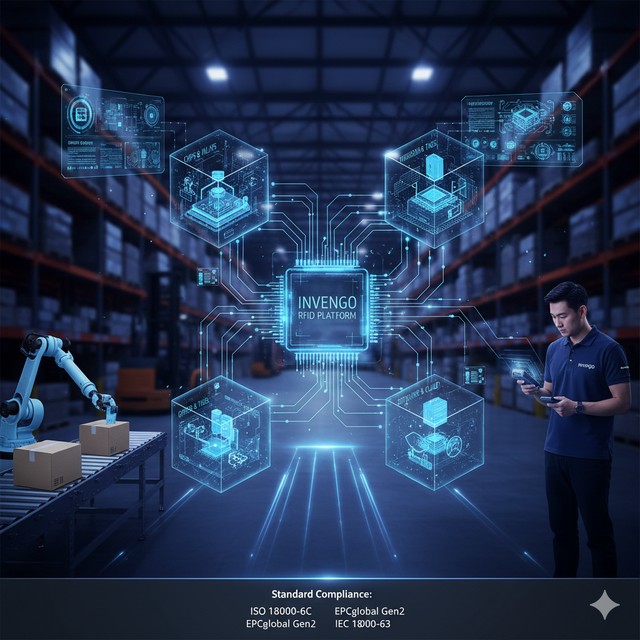





RFID is not a catalog item, but an engineering solution for specific constraints
⚙️ Our Approach
We do not sell 'the best tags in the world'. We work with those who understand that reliable automatic identification is built on the analysis of materials, designs, and adaptation to real operating conditions.
About the "Expert View on RFID" Section
This section is not a product catalog. It is a platform for objective analysis of engineering solutions in the field of automatic identification. Here, we move away from marketing promises and focus on technical substance to help engineers, CTOs, and project managers make informed decisions.
The goal is to create a resource where the evaluation criterion is not price or a catchy slogan, but the technology's fit for specific production and logistical challenges.
What You Will Find in This Section
Reviews of World Leaders' Solutions
Detailed breakdown of products and approaches by manufacturers: Inotec, Troi, Confidex, Omni-ID, Avery Dennison, and others. Emphasis on engineering features, not marketing presentations.
Analysis of Strengths for Industrial Tasks
Evaluation of solutions for specific scenarios: operation on metal, in extreme temperatures, in the presence of liquids, requirements for chemical resistance and mechanical strength.
Honest Breakdown of Limitations
Discussion of scenarios where RFID technology faces difficulties, and analysis of how leading manufacturers attempt to overcome or minimize these limitations.
Our Methodology
Each article is built on a unified principle to ensure maximum practical value:
- Application Context: Clear definition of the task for which the solution was created (pallet logistics, tool tracking, returnable transport packaging management).
- Solution Decomposition: Breakdown of components: chip type, antenna material, substrate, adhesive, protective coatings.
- Standards Compliance: Indication of compliance with industry standards (GS1, ISO, VDA, IFS) and results of independent tests.
- Integration Examples: Description of typical and edge-case implementation scenarios with achievable parameters (read range, read speed, service life).
- Practical Conclusions: A summary that defines the solution's niche and provides recommendations for its application.
🎯 Who This Section is For
• Automation and logistics engineers selecting components for identification systems.
• Technologists who need to ensure traceability in complex production environments.
• IT project managers evaluating the viability and reliability of RFID solutions.
• Procurement specialists who need reasoned criteria for supplier selection, not just price.
What You Won't Find Here
To maintain focus on content quality, we consciously exclude from this section:
Instead — facts, diagrams, test protocols, application examples, and engineering conclusions based on documentation and experience.
Section Philosophy
We believe there is no universal 'best' RFID tag. There is a solution correctly selected for the task, taking into account all constraints: physical, economic, and operational. The goal of this section is to give you the tools and knowledge for such a choice.
If you are looking not for 'the cheapest' but for 'the right one for your task' — welcome.
This is not a catalog. It is a practitioner's view on how reliable automatic identification systems are built.